The Ultimate Guide to Knitting an Adorable Sheep Baby Blanket
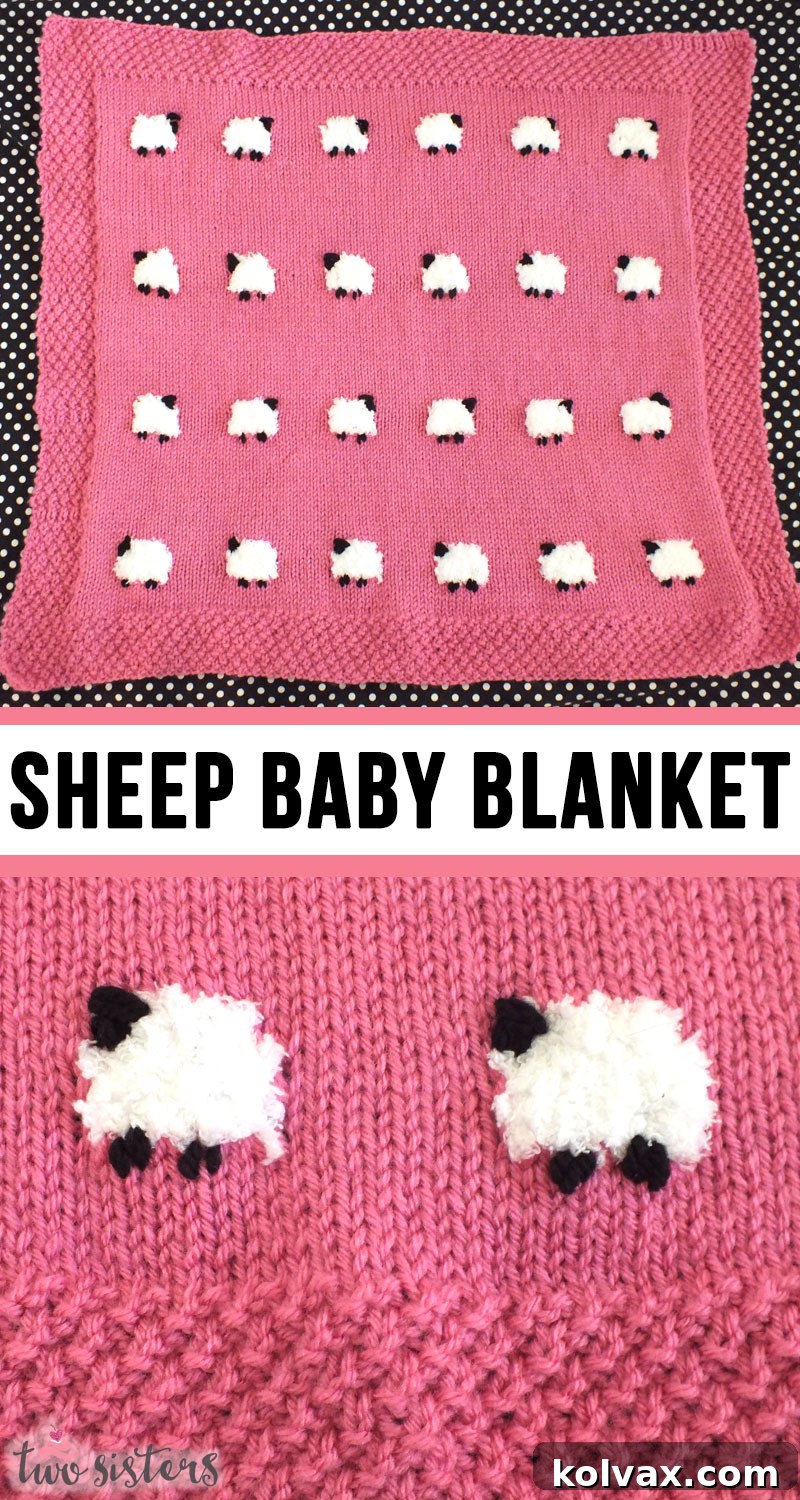
There’s nothing quite as special as a handmade gift, especially for a new arrival. Among the myriad of thoughtful presents, a hand-knitted baby blanket stands out for its warmth, comfort, and the undeniable love woven into every stitch. Today, we’re incredibly excited to share our journey in creating what has officially become the cutest baby blanket we’ve ever knitted: the charming Sheep Baby Blanket. This delightful project, with its whimsical sheep motifs, is destined to become a cherished heirloom, bringing joy and coziness to any little one.
Our inspiration for this particular design sprang from a captivating image spotted on Pinterest. It was an instant hit, and the moment we saw it, we knew we had to bring this adorable vision to life. The appeal of tiny, fluffy sheep frolicking across a soft blanket is simply irresistible. This blanket isn’t just a project; it’s a labor of love that promises to warm both baby and heart. If you know us and are expecting a little bundle of joy, consider this your spoiler alert: this heartwarming sheep blanket is likely what we’ll be knitting for you!
Why Choose the Sheep Baby Blanket Project?
Beyond its undeniable cuteness, the Sheep Baby Blanket offers a unique blend of simplicity and engaging challenge, making it a rewarding project for knitters of various skill levels. While the main body of the blanket relies on fundamental knit and purl stitches, the delightful sheep motifs introduce you to the exciting world of Intarsia knitting. This technique allows for distinct blocks of color within your knitting, perfect for creating pictorial designs like our little sheep without carrying yarns across the back, resulting in a beautifully neat finish.
The beauty of this project lies in its versatility. While our chosen color palette of soft pink and white evokes a classic nursery aesthetic, imagine this blanket in calming blues, cheerful yellows, or even a sophisticated neutral grey. The sheep design is so universally appealing that it looks adorable in virtually any color combination, allowing you to personalize it perfectly for the recipient. Whether you’re knitting for your own baby, a grandchild, a niece, or a dear friend, this blanket is a gesture that speaks volumes.
Essential Materials for Your Sheep Baby Blanket
To embark on this delightful knitting adventure, gathering the right tools and materials is your first step. We’ve compiled a comprehensive list of everything you’ll need, including links to help you find them easily. Investing in quality materials will not only make your knitting experience more enjoyable but also ensure the finished blanket is soft, durable, and safe for baby’s delicate skin.
Your Shopping List:
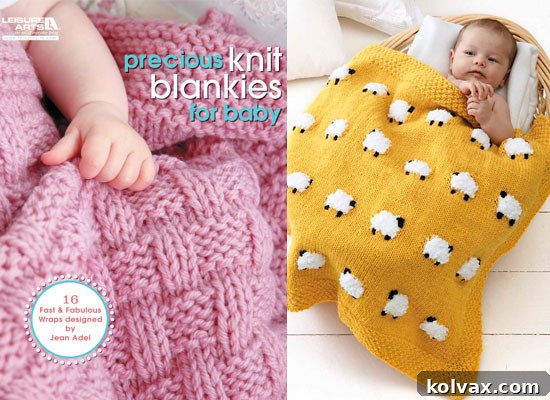
- Precious Knit Blankies for Baby pattern book by Jean Adel: This is the treasure trove containing the specific Sheep Baby Blanket pattern we followed, along with many other charming designs. It’s an invaluable resource for any knitter looking to create beautiful baby items.
- Yarn Bobbins (Set of 6+ recommended): Absolutely crucial for Intarsia knitting. These small bobbins allow you to manage multiple small balls of yarn for each color section of your sheep, preventing tangles and making colorwork much smoother.
- Size 8 (5mm) Circular Knitting Needle: Even though you’re knitting flat, a circular needle is ideal for accommodating the width of a baby blanket. It distributes the weight of the project evenly, reducing strain on your wrists and allowing for comfortable knitting for extended periods.
- Black Embroidery Thread (or fine black yarn): This is for adding the adorable embroidered details – the eyes and legs – that truly bring your sheep to life.
- Vanna’s Choice Yarn – Pink (or your preferred background color): We used a lovely pink for the main body of the blanket. Vanna’s Choice is a popular choice for baby items due to its softness, washability, and wide range of colors.
- Bernat Pipsqueak Fuzzy Yarn – White (or a similar textured white yarn): This unique yarn is perfect for creating the fluffy, cloud-like bodies of the sheep. Its soft, fuzzy texture adds an irresistible tactile element to the blanket, making the sheep feel incredibly cuddly.
- Scissors: For cutting yarn ends.
- Tapestry Needle: Essential for weaving in ends and for the embroidery work.
- Stitch Markers: Helpful for marking pattern repeats or specific sections, especially when you’re managing multiple colors.
As mentioned, the core pattern can be found in the excellent pattern book, Precious Knit Blankies for Baby by Jean Adel. We highly recommend acquiring this book for clear instructions and inspiring visuals. You can conveniently purchase it directly from Amazon.
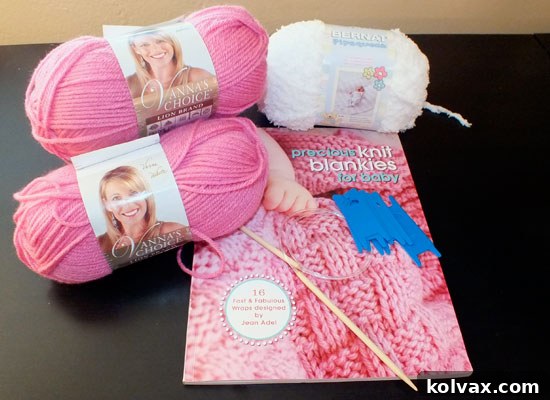
For our project, the beautiful pink and white yarns were sourced from Michaels, a fantastic craft store known for its extensive selection. When choosing your yarn, always consider both color and fiber content. For baby blankets, soft, washable acrylics or blends are often preferred for their ease of care and durability. The specific yarns we used, Vanna’s Choice and Bernat Pipsqueak, offered the perfect combination of softness for the blanket and delightful texture for the sheep.
Embarking on Your Knitting Journey: Getting Started
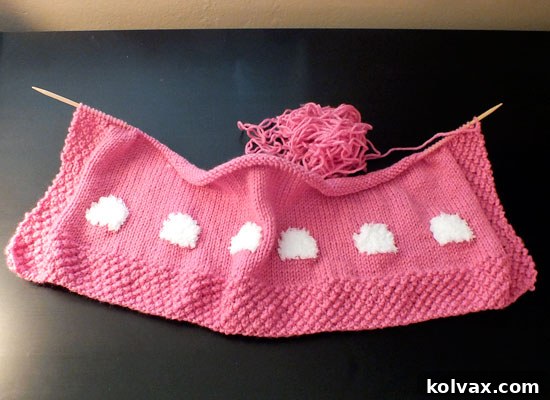
The main body of the blanket is constructed using a basic knit and purl pattern, often a simple stockinette stitch or garter stitch, framed by a border that prevents curling. This foundation is perfect for beginners and a relaxing rhythm for more experienced knitters. The real fun and challenge begin when you introduce the sheep motifs through Intarsia knitting. This was a new technique for us, and while it presented a delightful learning curve, the results were incredibly satisfying. Don’t be intimidated; Intarsia is a skill that, once mastered, opens up a world of creative possibilities in your knitting.
Mastering Intarsia for the Sheep Motifs
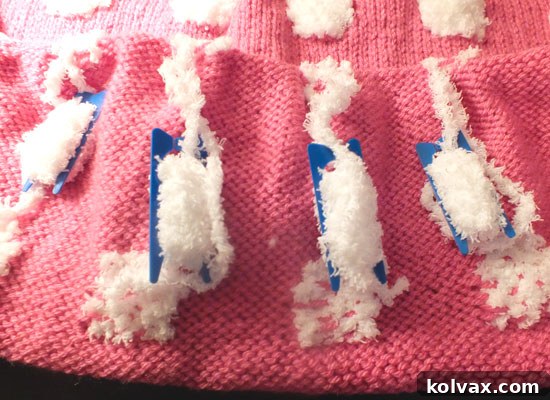
Intarsia involves working with separate lengths of yarn for each color block. Unlike Fair Isle, where you carry unused colors loosely across the back of your work, Intarsia means you twist the old and new colors together at the color change point. This creates a solid, single-thickness fabric without any stranding on the wrong side – ideal for baby blankets where loose strands could be a hazard. For this project, each individual white sheep required its own small bobbin of the fuzzy Bernat Pipsqueak yarn.
Managing multiple yarn bobbins can seem daunting at first, but with a little practice, it becomes intuitive. As you can see from the image depicting the back of the blanket during the sheep rows, each sheep has its dedicated yarn supply. The key is to twist the yarns when changing colors to prevent holes and ensure a clean transition. This meticulous process ensures that the finished blanket looks polished and professional on both sides, which is especially important for items meant for babies.
Bringing the Blanket to Life: From Puffs to Playful Sheep
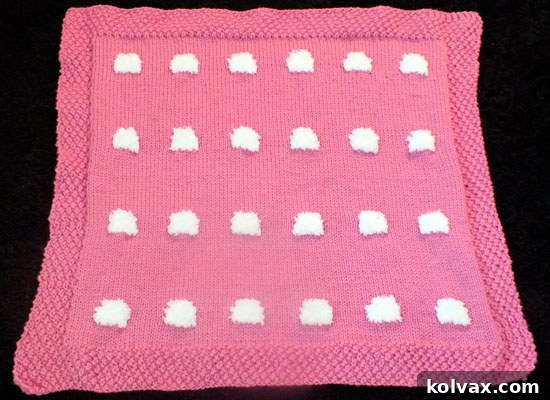
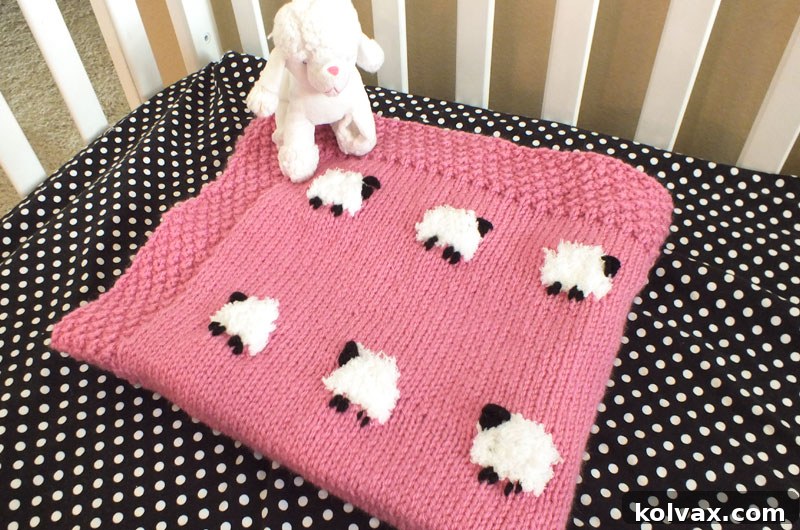
Once the main knitting is complete and your fluffy white “puffs” are integrated into the blanket, you reach the magical stage of transforming them into recognizable sheep! Before adding the embroidery, the blanket presents a soft, textured field. It’s worth noting that this particular pattern resulted in a blanket slightly smaller than some of the larger baby blankets we typically make. Its size makes it perfectly suited as a versatile cover-up for a bouncy chair, a car seat, or a stroller. It’s ideal for providing a comforting layer without being overly cumbersome, making it a practical choice for on-the-go parents.
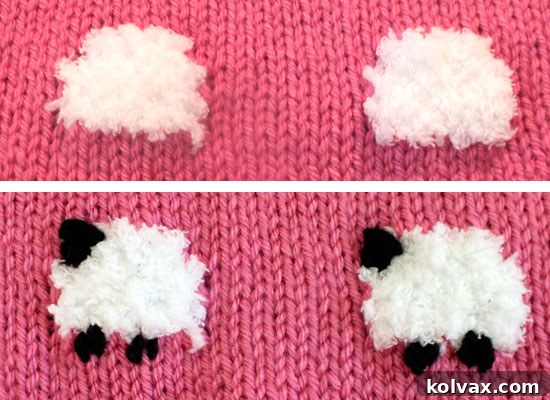
The final, charming detail is the embroidery. Using black embroidery thread or a fine black yarn, you carefully stitch on the tiny legs and simple head outlines for each sheep. This step is where their personalities truly emerge, turning simple textured areas into whimsical farm animals. Take your time with this part; even small details can make a big difference in the overall appeal of your finished blanket. A tapestry needle is perfect for this task, allowing you to create neat, defined stitches.
Customization and Care for Your Handmade Treasure
One of the greatest joys of knitting is the ability to personalize your creations. For this Sheep Baby Blanket, consider experimenting with different background colors for the main blanket body – a soft grey, a pale yellow, or even a serene mint green would all look wonderful. You could also vary the sheep yarn; while the fuzzy yarn is delightful, a solid white or cream yarn would offer a different, equally charming aesthetic. For an extra touch of personalization, consider subtly embroidering the baby’s initial or birth date in one corner of the blanket.
When it comes to caring for your precious handmade blanket, always refer to the care instructions of the yarns you used. Most acrylic baby yarns are machine washable on a gentle cycle and can be tumble-dried on low, making them highly practical for busy parents. However, hand washing and laying flat to dry will always prolong the life and beauty of your knitted items. Gentle handling ensures that this blanket remains soft and beautiful for years to come, a lasting reminder of the love poured into its creation.
The Lasting Impression of a Knitted Baby Blanket
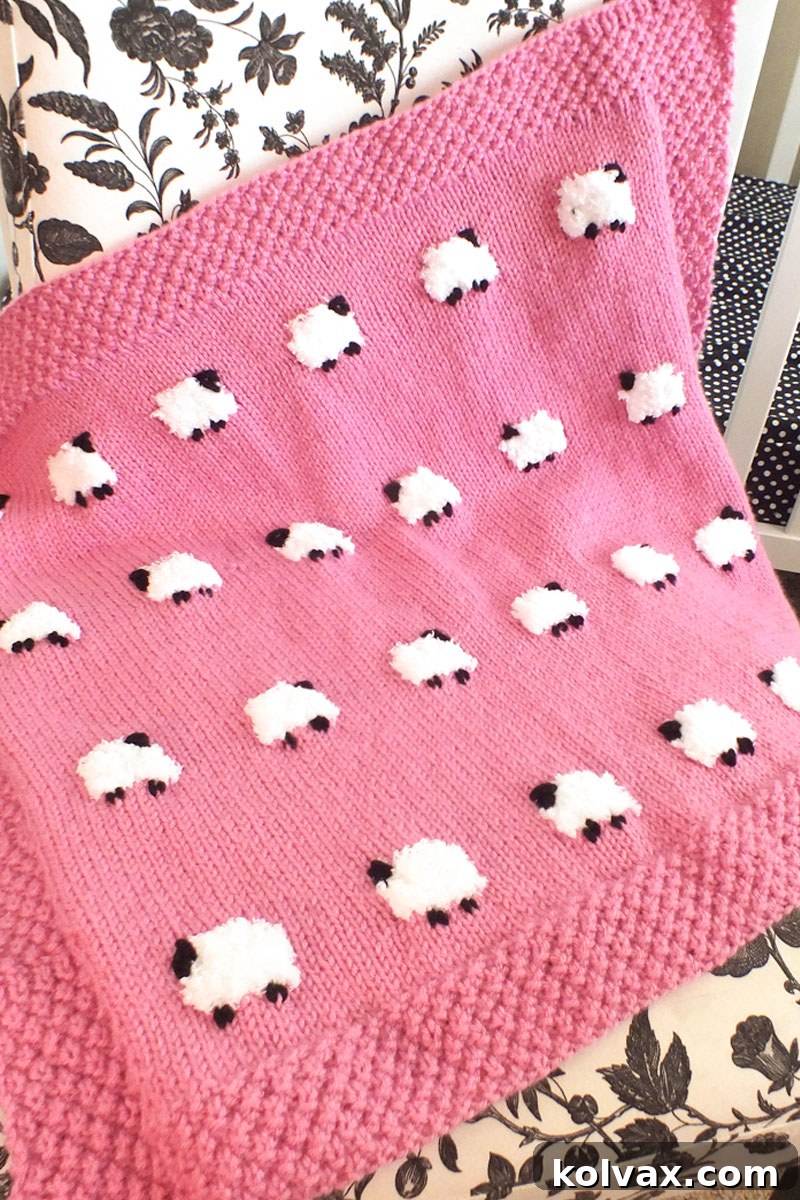
This Sheep Baby Blanket project is more than just knitting; it’s an act of creation and a gift of warmth and affection. The process, from selecting the yarns to perfecting the Intarsia sheep and adding the final embroidered touches, is incredibly rewarding. Seeing the finished product, soft, cozy, and adorned with its playful sheep, fills you with a sense of accomplishment and pride. It’s a testament to the power of handmade items – they carry a piece of the maker’s heart and soul.
We absolutely adore how this blanket turned out, and we hope our detailed guide inspires you to create your own. Whether you’re an experienced knitter looking for your next charming project or an adventurous beginner ready to tackle Intarsia, this Sheep Baby Blanket promises a delightful journey and a truly cherished keepsake. Follow us for more fun and inspiring baby blanket knitting projects, and share your own creations – we’d love to see them!