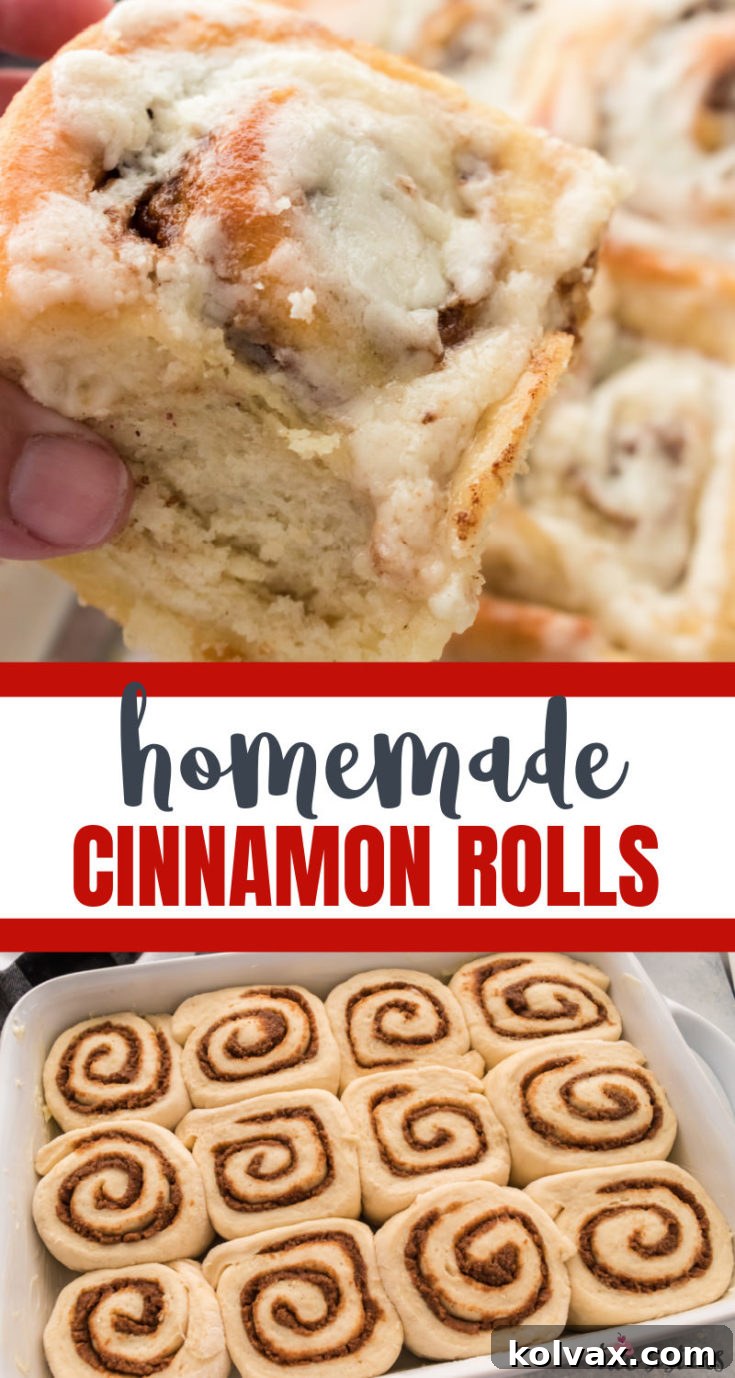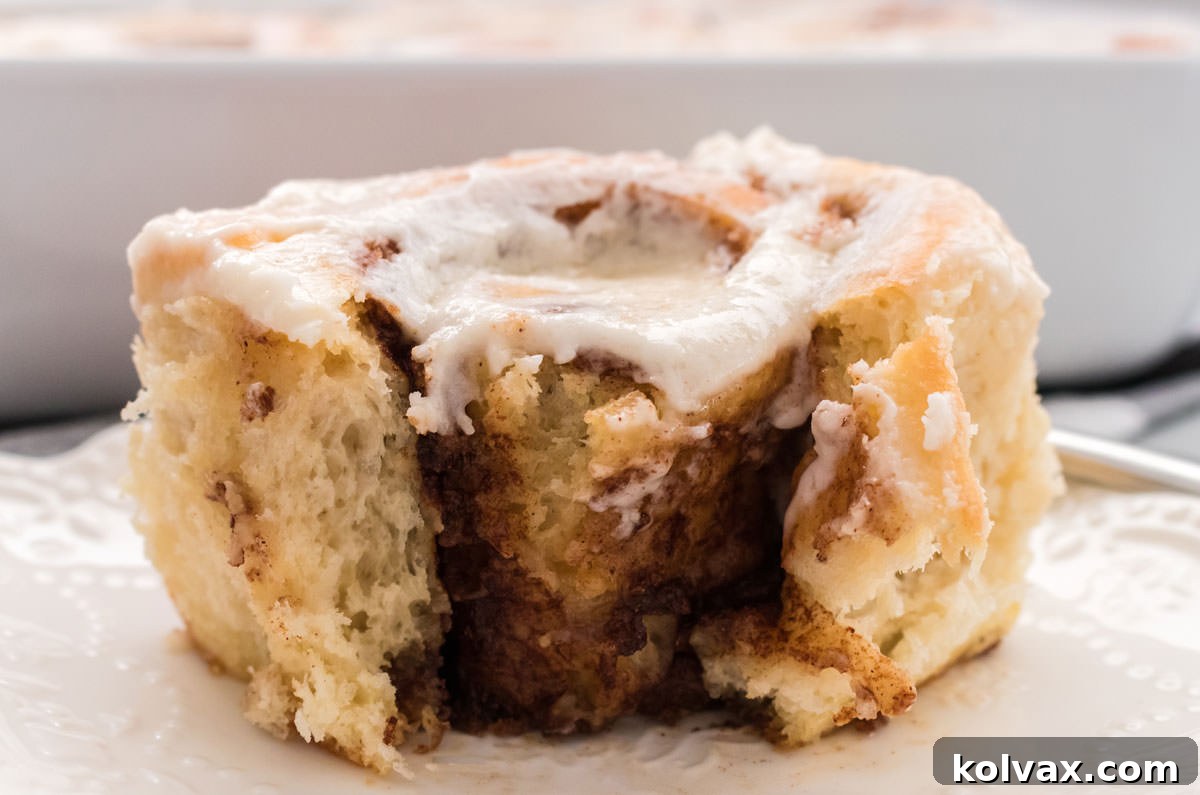
Welcome to the ultimate guide to crafting the most irresistible, melt-in-your-mouth Homemade Cinnamon Rolls you’ve ever tasted! Imagine waking up to the aroma of warm cinnamon and sweet dough, fresh from your oven, generously topped with a rich, tangy cream cheese frosting. These aren’t just any cinnamon rolls; they are a labor of love that promises a truly unforgettable breakfast experience. While the journey to perfectly fluffy, golden-brown cinnamon rolls might seem daunting at first, we’re here to demystify every step, ensuring your success with our detailed, easy-to-follow recipe. Get ready to impress your family and friends with a pastry that’s simply heavenly.
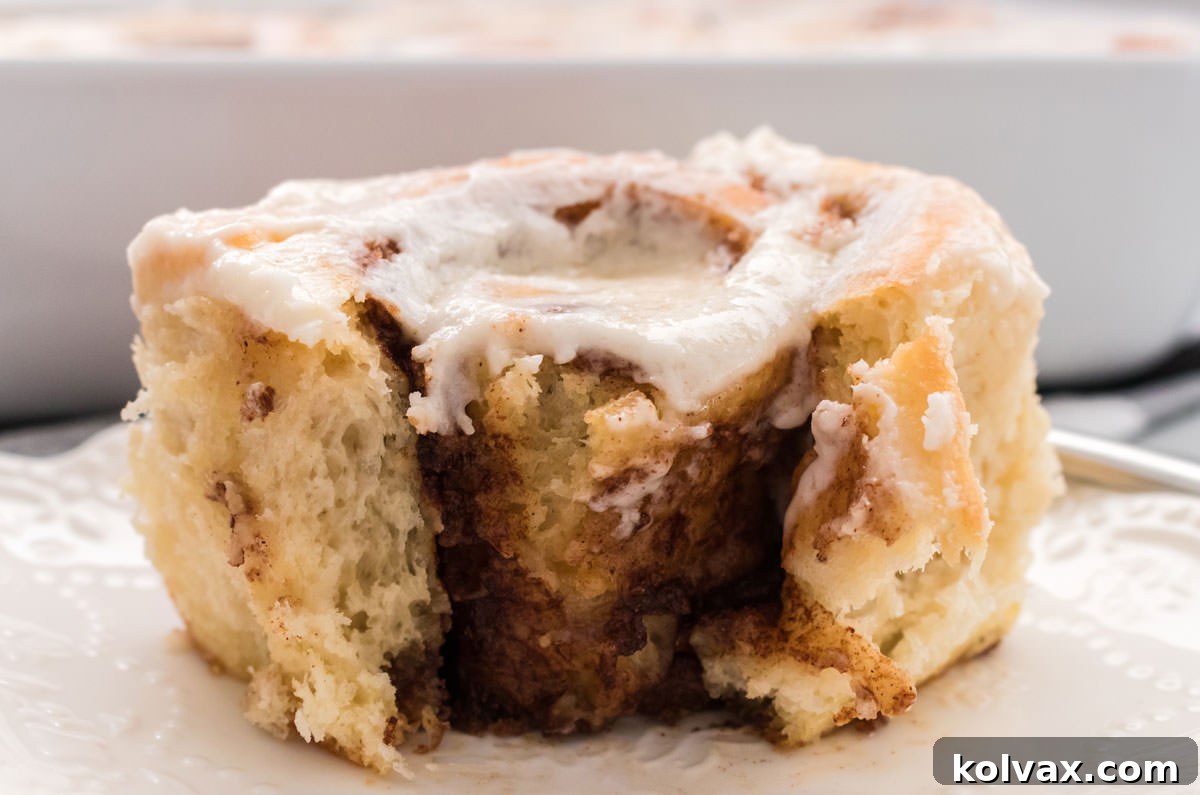
There’s an undeniable magic to homemade cinnamon rolls. That perfect balance of soft, tender dough, sweet and spicy cinnamon filling, and luscious frosting creates a symphony of flavors and textures that store-bought versions can rarely replicate. We understand the hesitation – mastering a yeast-based dough can feel like a culinary challenge. It took us a fair share of attempts to build our confidence and truly master this classic. But now, having unlocked the secrets to consistently perfect cinnamon rolls, we only wish we had started sooner! And now, we’re sharing all those hard-earned insights with you.
This recipe involves a few distinct stages, but each step is crucial for achieving that signature fluffy texture and rich flavor. Don’t be discouraged by the ingredient list or the process; with careful attention and a little patience, you’ll be pulling magnificent cinnamon rolls out of your oven every time. We promise the effort is profoundly rewarding, culminating in a breakfast pastry that will become a cherished tradition. However, if you’re short on time or prefer a simpler route, we also offer an easier no-yeast cinnamon roll recipe here (no judgment!). But for those ready to embark on the ultimate baking adventure, grab your active dry yeast, and let’s create something truly special!
How to Make Cinnamon Rolls From Scratch: Your Detailed Guide
Crafting cinnamon rolls from scratch is a rewarding experience that transforms simple ingredients into an extraordinary treat. Our comprehensive guide covers every aspect, from activating the yeast to achieving that perfect golden bake and, of course, the grand finale of irresistible frosting. Follow along closely, and you’ll soon be enjoying the best cinnamon rolls of your life.
Preparing the Dough: The Foundation of Fluffy Rolls
The secret to light and airy cinnamon rolls lies in a well-prepared dough. This initial stage is crucial for activating the yeast and ensuring your rolls rise beautifully.
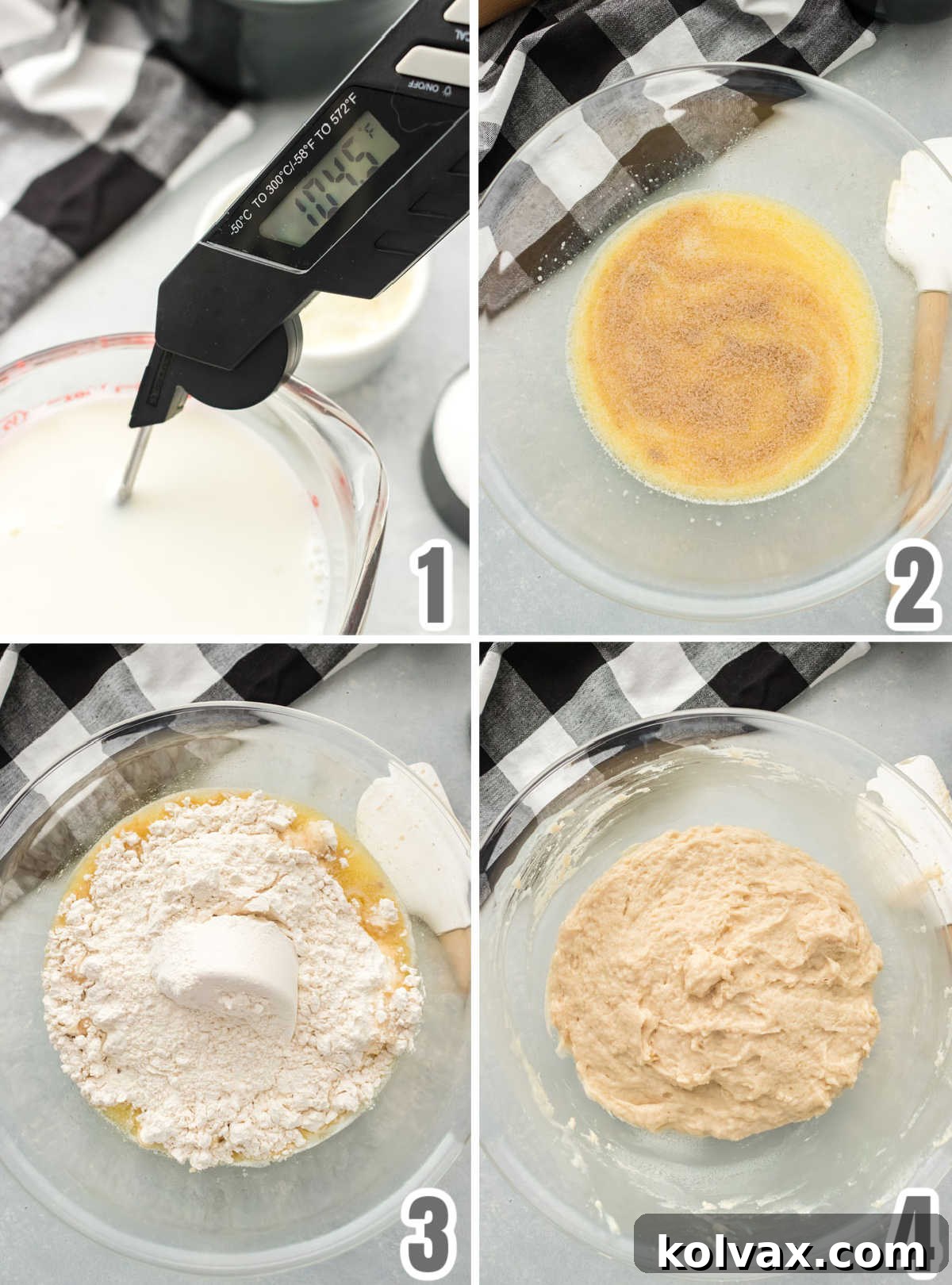
Step 1: Warm the Milk Precisely. Begin by heating your milk in the microwave until it reaches 105 degrees Fahrenheit (approximately 40-41 degrees Celsius). This temperature is ideal for activating the yeast without killing it. Too hot, and the yeast dies; too cold, and it won’t activate properly. Use a kitchen thermometer for accuracy.
Step 2: Combine Wet Ingredients with Care. Pour the precisely heated milk into a large mixing bowl. Add the melted butter and granulated sugar. Before proceeding, double-check the liquid’s temperature. Sometimes, adding melted butter can slightly increase the overall temperature. It’s imperative that the mixture remains around 105 degrees F. Anything significantly higher will inhibit yeast activity. Once the temperature is confirmed, sprinkle the active dry yeast over the liquid. Gently mix with a fork, then allow it to “bloom” for about 5 minutes. You’ll know the yeast is active when it becomes foamy and fragrant, indicating it’s alive and ready to work its magic.
Step 3: Introduce the First Batch of Flour. Add 4 cups of all-purpose flour to the mixing bowl with your bloomed yeast mixture.
Step 4: Mix Until Just Combined. Using a sturdy spoon, mix the liquid ingredients with the flour until just combined. The mixture will be thick and shaggy, not yet a smooth dough. Avoid overmixing at this stage, as excessive gluten development can lead to a tougher roll.
The First Rise: Patience is Key for Volume and Texture
The first rise is where the dough develops flavor and its characteristic light, airy texture. This stage requires patience, but it’s essential for successful cinnamon rolls.
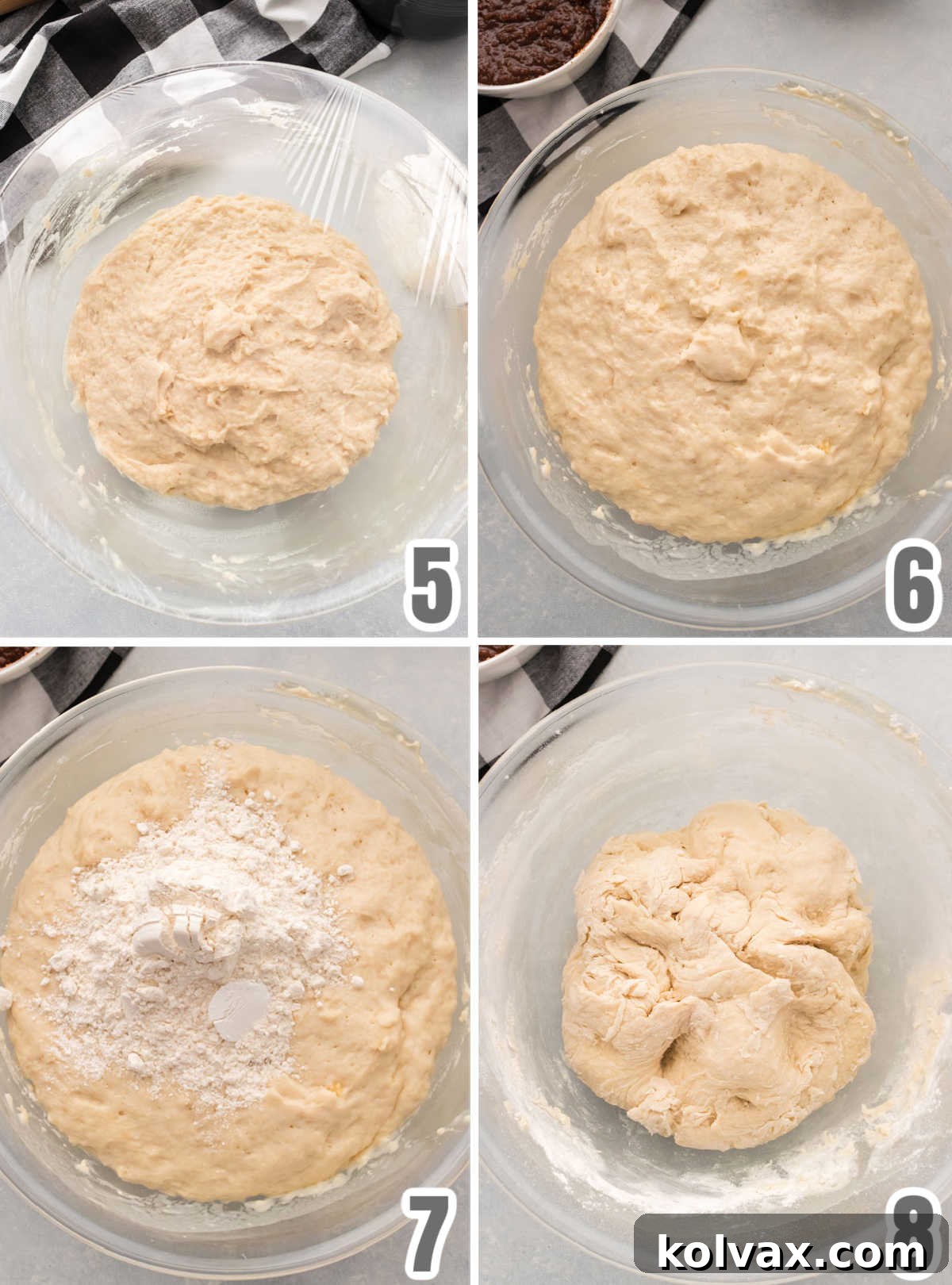
Step 5: Allow the Dough to Rise. Cover the mixing bowl tightly with plastic wrap. Place it in a warm, draft-free spot and let the dough rise for at least 1 hour at room temperature. A slightly warmer environment will help it rise faster, but avoid anything too hot, which can negatively impact flavor.
Step 6: Observe the Growth. After the rising period, your dough should have approximately doubled in size. This indicates successful yeast activity and a well-fermented dough, ready for the next stage.
Step 7: Incorporate More Flour. Add the remaining 3/4 cup of all-purpose flour to the risen dough. Mix it in with a spoon until mostly incorporated.
Step 8: Achieve the Right Consistency. Continue mixing until the dough begins to pull away cleanly from the sides of the bowl. At this point, it should be less sticky and more manageable, ready for kneading.
Kneading and Shaping: Crafting the Perfect Base
This is where your dough truly comes together, becoming smooth and elastic. Proper kneading and rolling are key to creating the distinct layers of your cinnamon rolls.
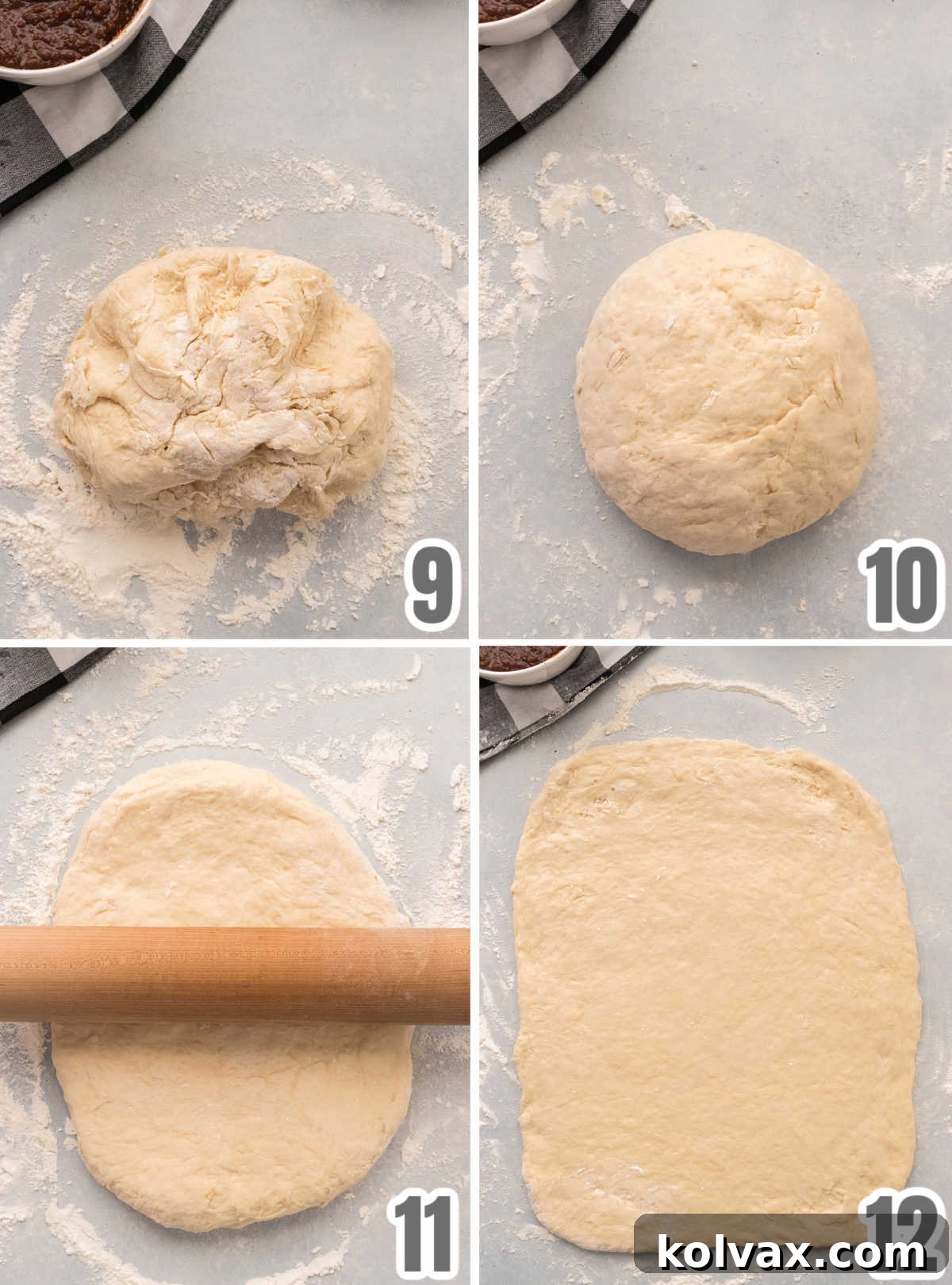
Step 9: Prepare Your Work Surface. Lightly flour a clean, dry surface. Carefully pour the dough out onto this floured area.
Step 10: Knead Gently. Knead the dough lightly until it comes together into a smooth, cohesive ball. The dough should feel soft and pliable, not sticky. It should not stick to your hands or the work surface. If it feels too sticky, add flour 1 tablespoon at a time, incorporating it fully until the desired consistency is reached. Avoid adding too much flour, as this can result in dry rolls.
Step 11: Grab Your Rolling Pin. Once kneaded, the dough is ready to be rolled out. Prepare your rolling pin for action.
Step 12: Roll into a Rectangle. Use your rolling pin to gently and evenly roll the dough into a large rectangle, approximately 12×17 inches in size. Aim for an even thickness across the entire surface to ensure uniform rolls.
Crafting the Irresistible Cinnamon Filling
The heart of any great cinnamon roll is its filling. This sweet and spicy mixture, generously spread, creates the iconic swirls of flavor.
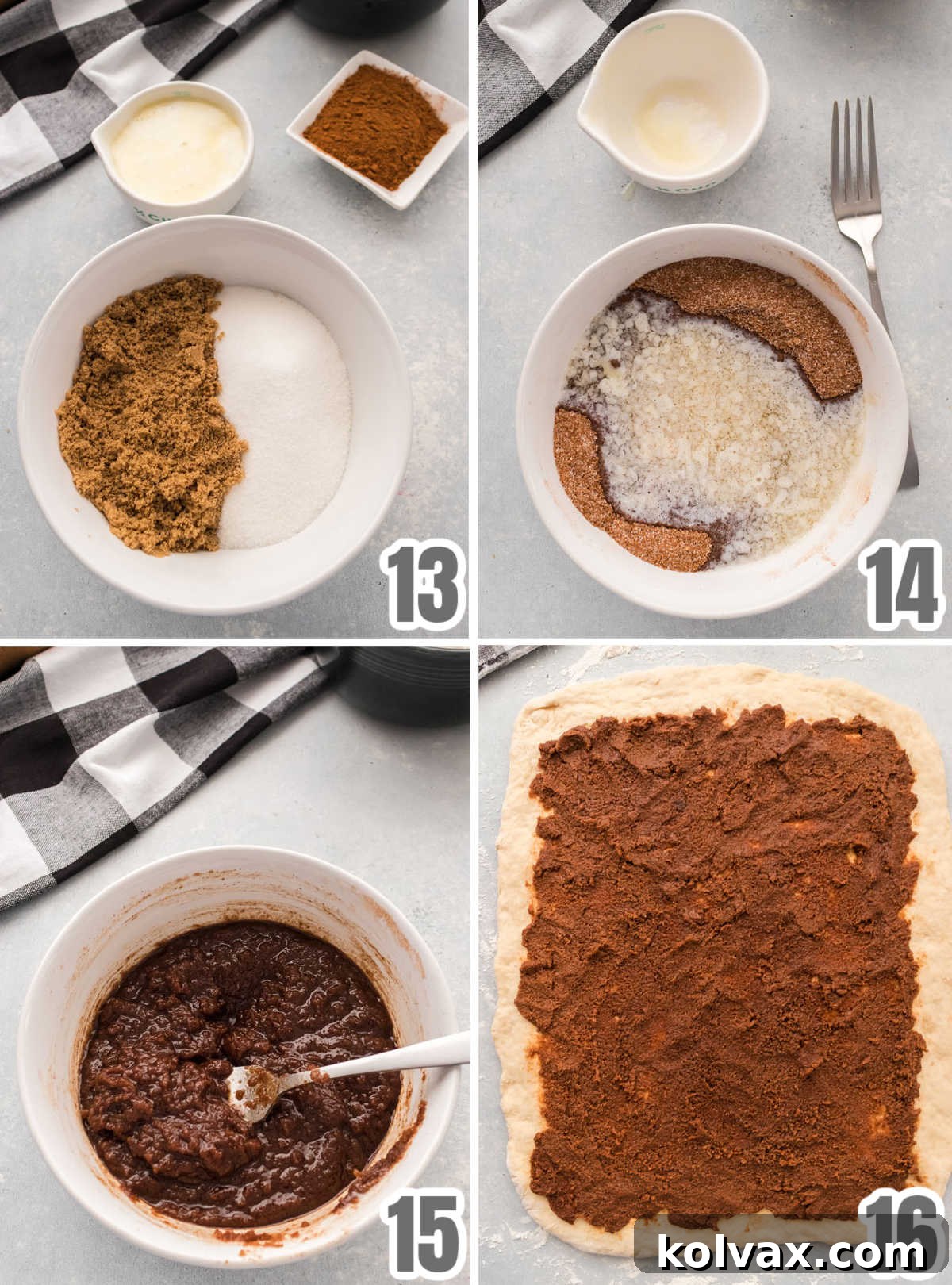
Step 13: Mix Dry Filling Ingredients. In a separate bowl, combine the brown sugar, granulated sugar, and ground cinnamon. Mix thoroughly with a fork until all ingredients are well-distributed.
Step 14: Add Melted Butter. Pour the melted butter into the sugar and cinnamon mixture. The butter acts as a binder and adds richness to the filling.
Step 15: Combine Thoroughly. Mix the butter into the dry ingredients until a thick, spreadable paste forms. Ensure there are no dry pockets of sugar remaining.
Step 16: Spread Evenly. Using an offset spatula or the back of a spoon, spread the cinnamon sugar butter mixture evenly across the entire surface of your rolled-out dough rectangle. Make sure to go all the way to the edges to ensure every bite of your roll is flavorful.
Rolling and Slicing: The Signature Cinnamon Roll Shape
This stage gives your cinnamon rolls their classic spiral shape. Precision here helps achieve beautiful, uniform rolls.
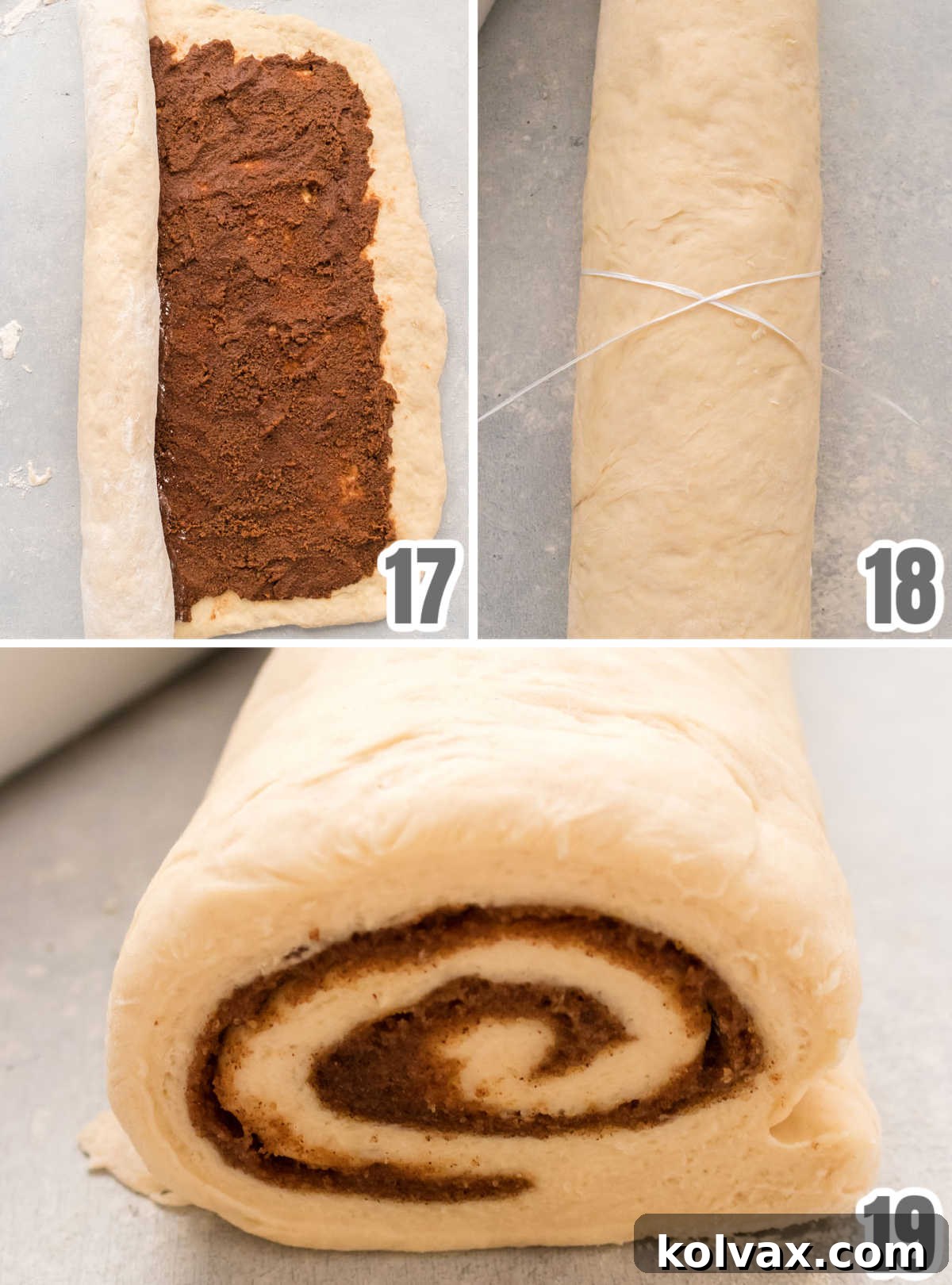
Step 17: Roll into a Tight Cylinder. Starting from one of the longer sides of the rectangle, carefully and tightly roll the dough into a cylinder. Aim for a snug roll to prevent gaps and ensure a beautiful spiral in the finished product. Gently pinch the seam closed at the end.
Step 18: Slice with Dental Floss. For perfectly clean and sharp cuts that won’t squish your beautiful spirals, use unflavored dental floss. Slide a piece of floss underneath the rolled dough, cross the ends over the top, and pull firmly to slice through. This technique is far superior to using a knife.
Step 19: Create Equal Slices. Cut the long cylinder of dough into 12 equal slices, each approximately 1 to 1.5 inches thick. Arrange them cut-side up.
The Second Rise & Baking Perfection
One last rise before baking ensures maximum fluffiness, and then it’s time for the oven to transform them into golden-brown delights.
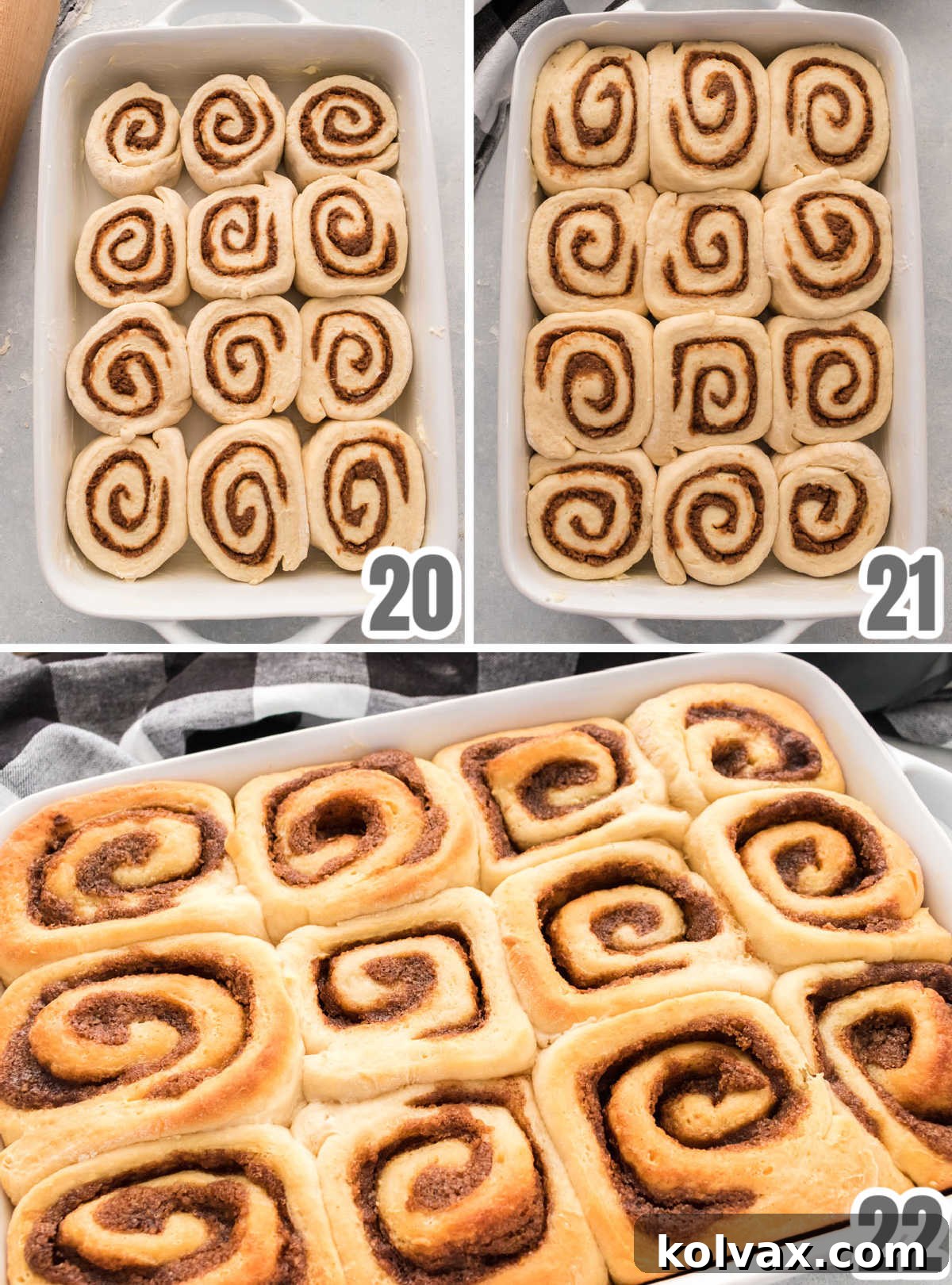
Step 20: Arrange in Baking Dish. Lightly butter a 9×13 inch baking dish. Arrange the sliced cinnamon rolls snugly in the prepared dish, leaving a little space between each roll for expansion.
Step 21: The Second Rise. Cover the baking dish with a clean kitchen towel and allow the rolls to rise again for an additional 30 minutes in a warm spot. This second rise contributes significantly to their final fluffy texture.
Step 22: Bake to Golden Perfection. Preheat your oven to 350 degrees Fahrenheit (175 degrees Celsius). Bake the cinnamon rolls for 25-30 minutes, or until they are golden brown on top and cooked through. To prevent them from browning too quickly or excessively on top, we often recommend loosely covering the pan with a piece of aluminum foil after about 15 minutes of baking. This ensures a beautifully even bake.
The Grand Finale: Decadent Cream Cheese Frosting
No cinnamon roll is complete without a generous slathering of rich, creamy frosting. This step elevates your homemade treats to pure decadence.
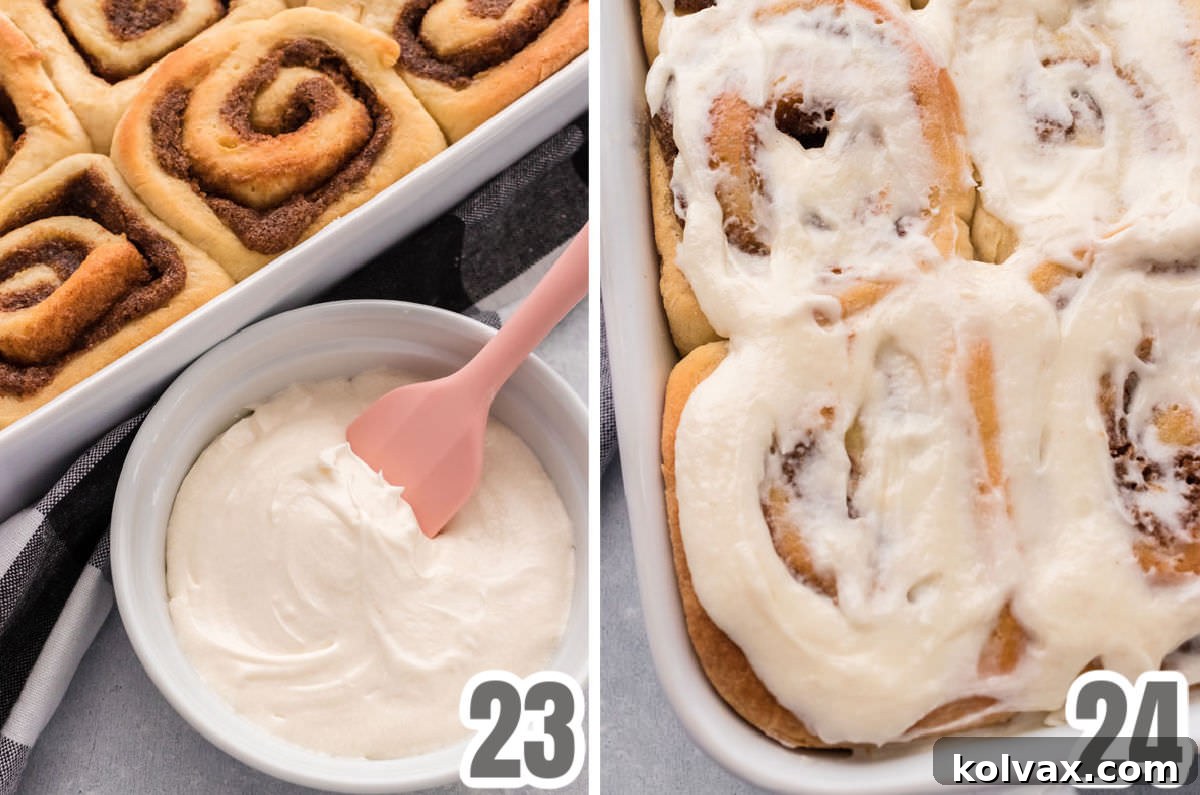
Step 23: Prepare Your Frosting. While the rolls are baking, prepare your chosen frosting. For an extra special touch, we highly recommend our incredibly rich and tangy Best Cream Cheese Frosting. You can find all the detailed instructions and ingredients for this delicious recipe by following that link. Alternatively, a simpler vanilla icing recipe is provided in our recipe card below.
Step 24: Frost Generously. Once the cinnamon rolls are out of the oven, allow them to cool in the pan for at least 15 minutes. This cooling period is crucial; if you frost them too soon, the frosting will melt into the rolls rather than sitting beautifully on top. After cooling slightly, spread your chosen frosting liberally over the warm rolls. The slight warmth of the rolls will help the frosting melt just enough to create a delightful glaze. Serve immediately and enjoy the fruits of your labor!
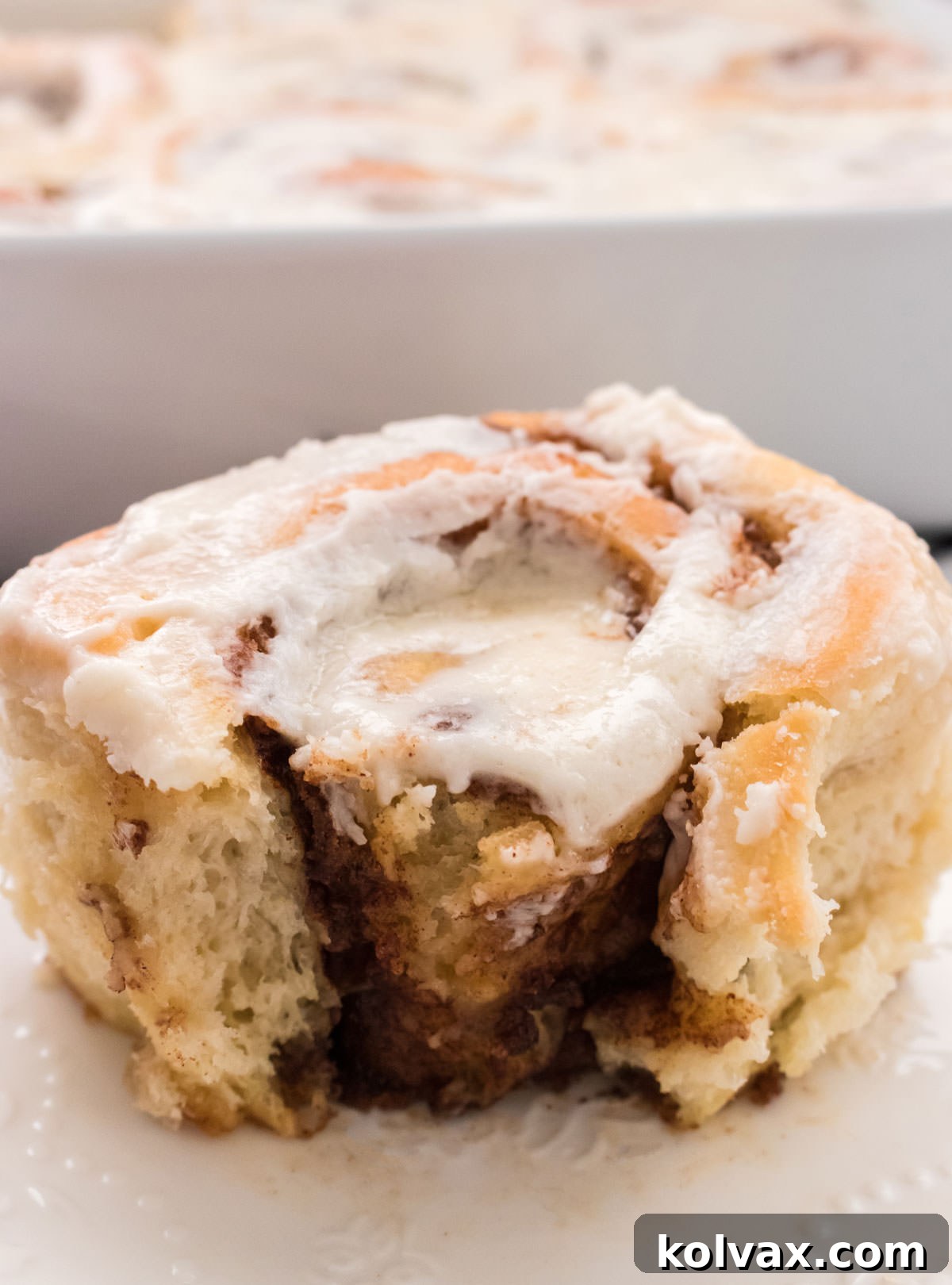
Essential Tips for Cinnamon Roll Success
Even with a detailed recipe, a few extra tips can make all the difference in perfecting your homemade cinnamon rolls:
- Yeast Temperature is Non-Negotiable: Always use a thermometer to check milk temperature. Too hot (above 115°F/46°C) kills the yeast; too cold (below 100°F/38°C) won’t activate it properly, leading to dense rolls.
- Don’t Over-Flour: Resist the urge to add too much flour during kneading. A slightly sticky dough is better than a dry, tough one. Add flour one tablespoon at a time only if truly necessary.
- Warm Spot for Rising: Dough loves warmth. A slightly warm oven (turned off, with the light on) or near a sunny window can provide the ideal environment for rising.
- Dental Floss for Clean Cuts: This trick is a game-changer! It prevents squishing the rolls and keeps the filling intact, ensuring beautiful spirals.
- Prevent Over-Browning: If your rolls are browning too quickly on top before being fully cooked through, loosely tent them with aluminum foil for the remaining bake time.
- Frosting Temperature: Wait at least 15 minutes before frosting. Warm rolls help the frosting melt slightly for a beautiful glaze, but hot rolls will cause it to completely disappear.
- Storage: Store leftover cinnamon rolls in an airtight container at room temperature for 2-3 days, or in the refrigerator for up to a week. Reheat gently in the microwave for a fresh-baked taste.
Frequently Asked Questions (FAQ) About Homemade Cinnamon Rolls
Here are answers to some common questions bakers have when making cinnamon rolls from scratch:
Q: What if my yeast doesn’t bloom?
A: If your yeast doesn’t become foamy after 5 minutes, it likely means your milk was either too hot (killing the yeast) or too cold (not activating it). Discard the mixture and start again with fresh yeast and accurately tempered milk.
Q: Can I use instant yeast instead of active dry yeast?
A: Yes, you can! Instant yeast can often be mixed directly with the dry ingredients without blooming it first. However, for this recipe’s structure, following the blooming step with instant yeast will also work fine. You might find the rise times slightly shorter.
Q: Can I prepare the cinnamon rolls ahead of time?
A: Absolutely! You can assemble the rolls and place them in the baking dish. After the second rise, instead of baking, cover them tightly with plastic wrap and refrigerate overnight (up to 12-18 hours). In the morning, take them out of the fridge at least 30-60 minutes before baking to allow them to come to room temperature and continue their rise slightly before baking as directed.
Q: How long do homemade cinnamon rolls last?
A: Freshly baked and frosted cinnamon rolls are best enjoyed the same day. Stored in an airtight container, they’ll remain delicious at room temperature for 2-3 days, or refrigerated for up to a week. Reheating them gently will bring back some of their fresh-baked goodness.
Q: Can I freeze baked or unbaked cinnamon rolls?
A: Yes, both!
- To freeze unbaked: Assemble the rolls and place them in a foil pan. Cover tightly with plastic wrap and then foil. Freeze for up to 1 month. When ready to bake, thaw overnight in the refrigerator, then let rise at room temperature for 1-2 hours before baking.
- To freeze baked: Allow fully baked and cooled rolls (unfrosted) to freeze individually on a baking sheet. Once solid, transfer to an airtight freezer bag for up to 2-3 months. Thaw at room temperature and warm gently before frosting.
Other Breakfast Treats You Will Love
- Caramel Sticky Buns
- Monkey Bread
- French Toast Casserole with Maple Syrup Icing
- Christmas Morning Coffee Cake
Did you Make This Recipe? Leave a review below, then snap a picture and tag @twosisterscrafting on Instagram so we can see it!
And don’t forget to follow us on Pinterest, Facebook, and Instagram!
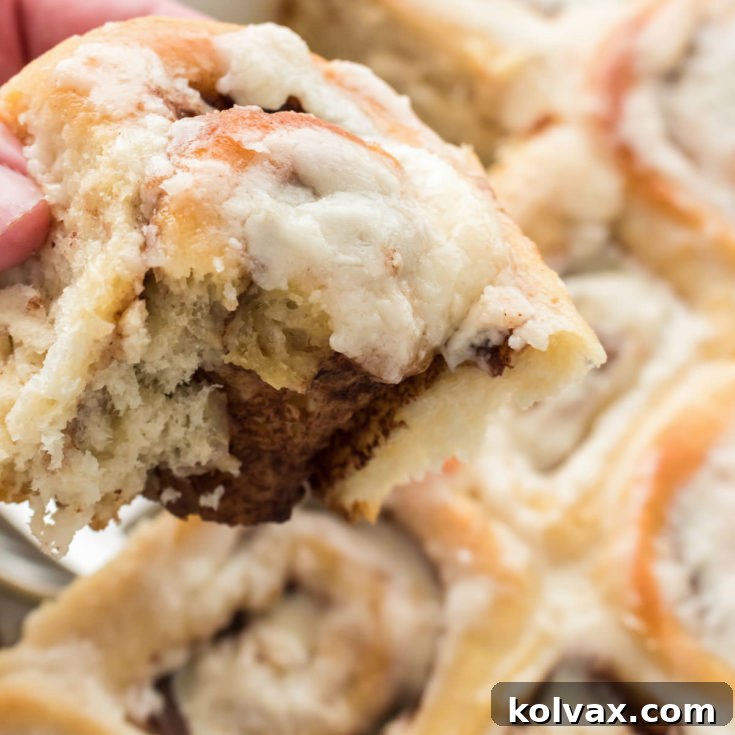
Print Recipe
Homemade Cinnamon Rolls
These light and fluffy Homemade Cinnamon Rolls taste delicious hot out of the oven and topped with our extremely yummy Cream Cheese Frosting and we have all the instructions you’ll need to make them perfectly every time!
12 servings
1 hour 50 minutes
35 minutes
2 hours 25 minutes
Ingredients
For the Rolls:
- 1/2 cup Sweet Cream Salted Butter, melted
- 2 cups Milk
- 1/2 cup Granulated Sugar
- 2 1/4 teaspoons Active Yeast
- 4 3/4 cups All-Purpose Flour
- 1 teaspoon Baking Powder
For the Filling:
- 1/2 cup Sweet Cream Salted Butter, melted
- 2/3 cup Brown Sugar
- 2/3 cup Granulated Sugar
- 1/2 teaspoon Vanilla Extract
- 2 heaping tablespoons Ground Cinnamon
For the Basic Icing:
- 1/2 cup Sweet Cream Salted Butter, melted
- 2 teaspoons Vanilla Extract
- 4 cups Powdered Sugar
- 1-2 tablespoons Cream or Milk (to thin icing)
Instructions
- Heat milk in the microwave to 105 degrees F.
- Pour heated milk, melted butter, and sugar into a mixing bowl. Double-check the liquid temperature (must be around 105 degrees F).
- Add yeast to the bowl, mix lightly with a fork, and allow to bloom for 5 minutes.
- Add 4 cups of flour to the mixing bowl.
- Mix the liquid and flour with a spoon until combined.
- Cover the bowl with plastic wrap and allow the dough to rise for at least 1 hour at room temperature until doubled in size.
- Add 3/4 cup of flour to the dough and mix with a spoon until it pulls away from the sides of the bowl.
- Pour the dough onto a floured surface. Knead lightly until it forms a non-sticky ball, adding 1 tablespoon of flour at a time if needed.
- Use a rolling pin to roll the dough into a 12×17 inch rectangle.
- For the filling: In a bowl, combine brown sugar, granulated sugar, and cinnamon with a fork.
- Add melted butter to the filling mixture and mix until combined.
- Spread the cinnamon sugar butter evenly onto the rolled-out dough.
- Roll the dough into a tight cylinder.
- Use unflavored dental floss to smoothly slice the dough into 12 equal pieces.
- Place the rolls into a buttered 9×13 inch baking dish.
- Cover the baking dish with a kitchen towel and allow the rolls to rise again for 30 minutes.
- Bake in an oven preheated to 350 degrees F for 25-30 minutes or until golden brown. (Cover with foil after 15 minutes if tops brown too quickly).
- Make your chosen icing. For a basic icing: In a bowl, cream together melted butter, vanilla extract, and powdered sugar. Add cream or milk 1 tablespoon at a time until desired consistency. (Alternatively, use our Best Cream Cheese Frosting recipe).
- Frost the cinnamon rolls liberally after they have cooled for at least 15 minutes.
Did you Make this Recipe? Leave a review below, then snap a picture and tag @twosisterscrafting on Instagram so we can see it!
Cuisine: American /
Category: Breakfast