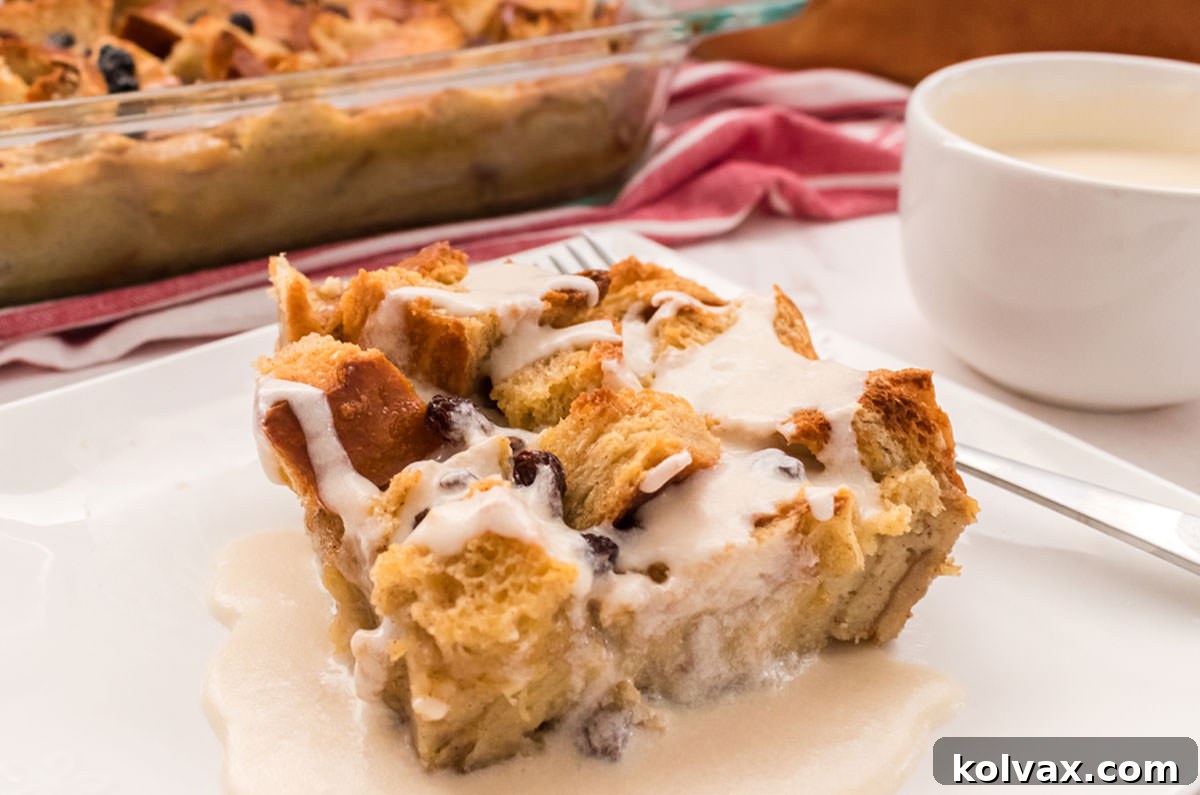
Welcome to the ultimate guide for crafting a classic Bread Pudding, a timeless dessert that embodies warmth, comfort, and simple indulgence. This easy-to-follow recipe transforms humble bread into a custardy delight, rich with the inviting aromas of vanilla and cinnamon. Whether you’re a seasoned baker or a kitchen novice, our detailed instructions and expert tips will help you create a show-stopping dessert that’s perfect for any occasion, from cozy family dinners to elegant gatherings. Discover the secrets to a perfectly baked bread pudding, complete with a luscious vanilla sauce that elevates every spoonful.
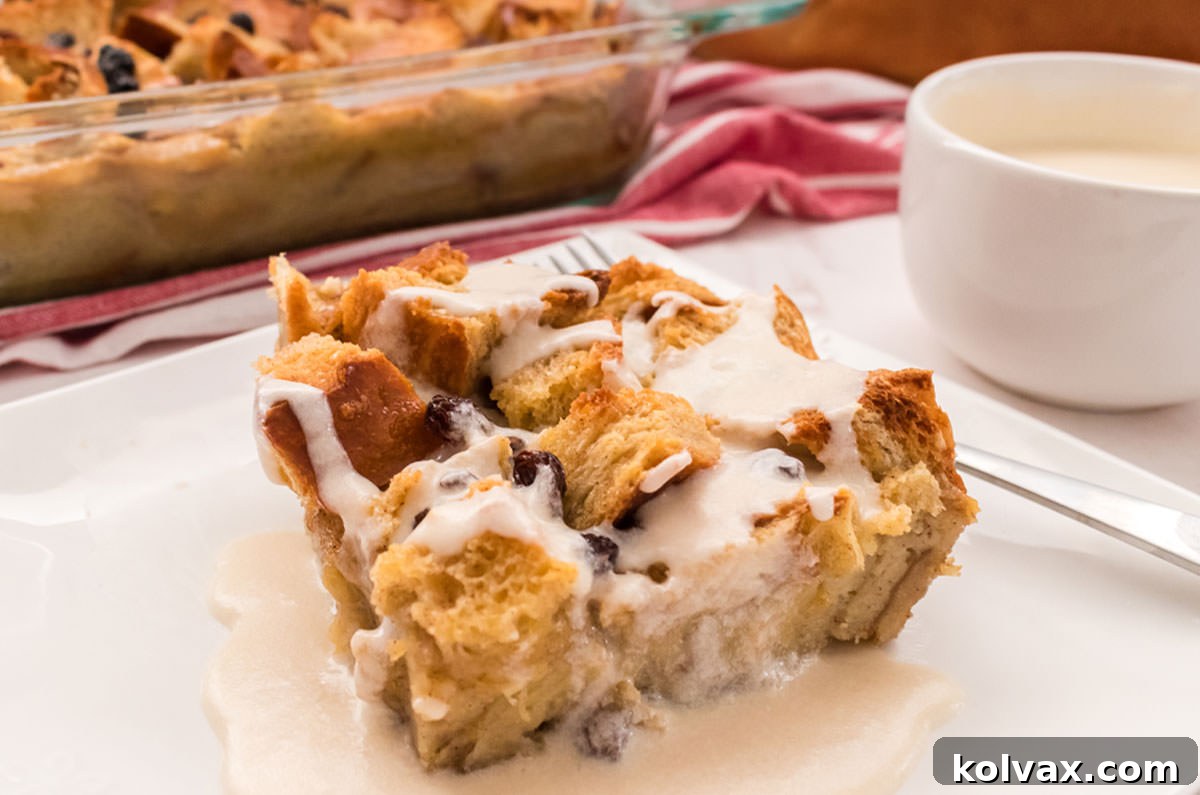
There’s a reason Bread Pudding often makes an appearance on popular cooking shows like Chopped – it’s a testament to its versatility, simplicity, and universal appeal as a comforting dessert. This classic dish, featuring tender chunks of bread soaked in a rich vanilla and cinnamon-spiced custard, then baked to golden perfection, truly is the epitome of comfort food. Our tried-and-true recipe guides you through creating a decadent bread pudding that’s wonderfully easy to make, yet tastes incredibly luxurious. We start with sturdy French bread, soak it in a creamy vanilla custard, and finish it with plump raisins and a delightful homemade vanilla sauce. Get ready to impress your taste buds and loved ones with this truly yummy dessert!
The Essence of Bread Pudding: A Timeless Comfort
Bread pudding is more than just a dessert; it’s a culinary hug, a dish steeped in history and designed to make the most of simple ingredients. Originating as a way to utilize stale bread, it has evolved into a beloved staple in kitchens worldwide. The magic lies in the transformation: dry bread becomes wonderfully moist and tender, absorbing a sweet, aromatic custard that bakes into a delightful, cohesive treat. The combination of textures – a slightly crispy top, a soft, custardy interior, and chewy bursts of raisins – makes every bite a delightful experience. It’s a dish that transcends seasons, perfect for a cold winter evening or a light summer brunch, always bringing a sense of nostalgic warmth.
Crafting the Luscious Custard Mixture
The heart of any great bread pudding lies in its custard. A perfectly balanced custard provides the moisture, sweetness, and rich flavor that elevates the bread from ordinary to extraordinary. Our recipe uses a simple yet incredibly effective blend of eggs, dairy, sugar, and spices to create a custard that’s both flavorful and sets beautifully. Follow these steps for a smooth and consistent custard base that will perfectly infuse your bread.
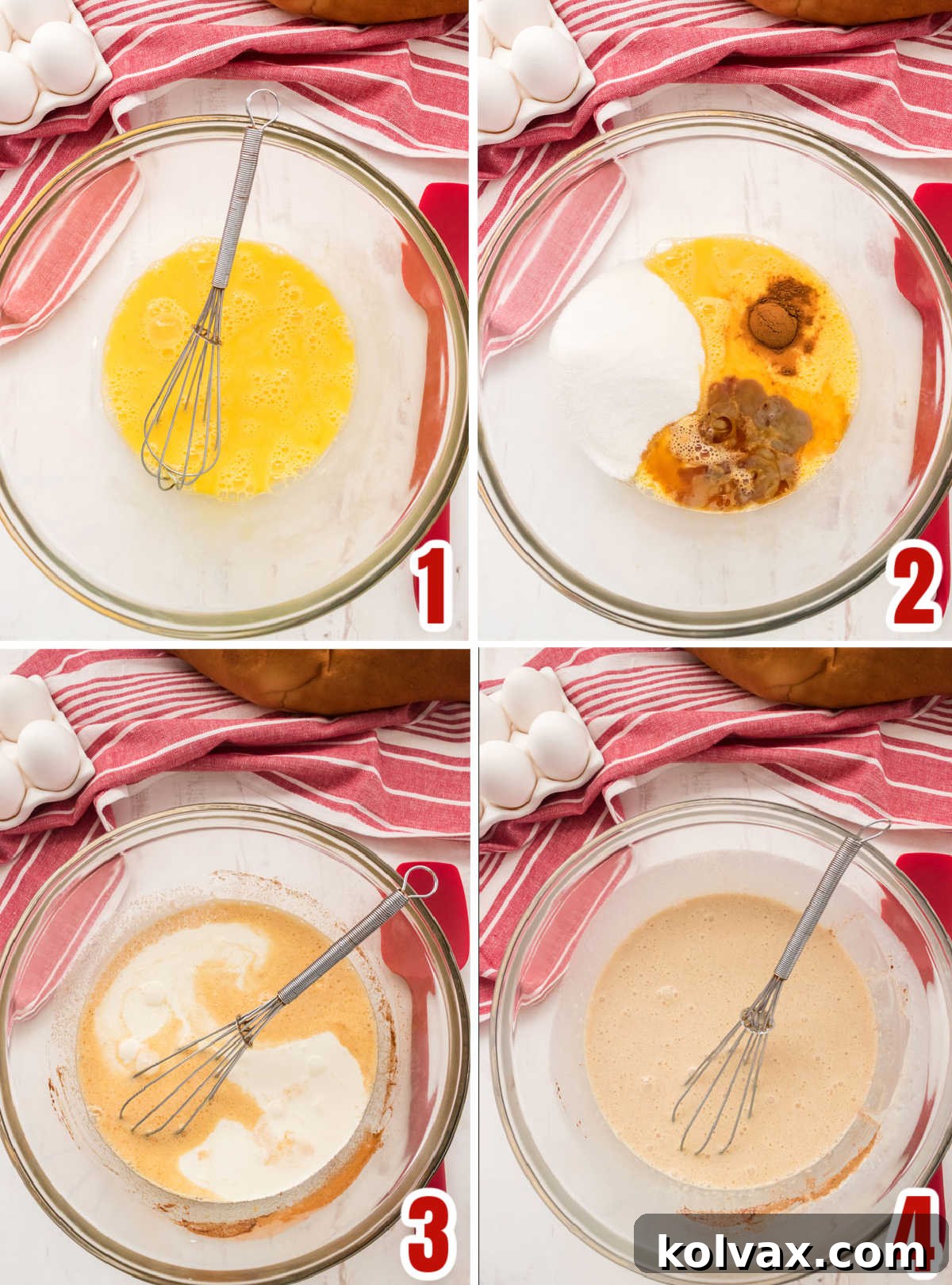
Step 1: Begin by cracking the fresh eggs into a large mixing bowl. Whisk them thoroughly until the yolks and whites are completely combined and slightly frothy. This ensures a uniform texture in your custard and helps prevent streaks of egg white in the finished pudding.
Step 2: To the whisked eggs, add the granulated sugar, ground cinnamon, and pure vanilla extract. These ingredients are key to the bread pudding’s signature warm and inviting flavor profile. Mix vigorously until the sugar is fully dissolved and all the ingredients are well incorporated. You don’t want any grainy sugar at the bottom of the bowl.
Step 3: Gently pour the heavy whipping cream into the mixture. The cream is crucial for a rich, decadent custard that will yield a wonderfully moist and tender bread pudding. While other milks can be used, heavy cream offers the most luxurious result.
Step 4: Continue to mix until all components are completely combined, creating a smooth, uniform custard. Once blended, set the custard mixture aside while you prepare the bread. Allowing it to rest briefly can also help the flavors meld.
Assembling Your Masterpiece: The Bread Pudding
With your delectable custard ready, the next step is to prepare the bread and assemble your pudding. The choice of bread and how it’s prepared are crucial for the final texture. We recommend a dense, slightly stale bread to prevent the pudding from becoming overly mushy, allowing it to soak up the custard beautifully while retaining some structure.
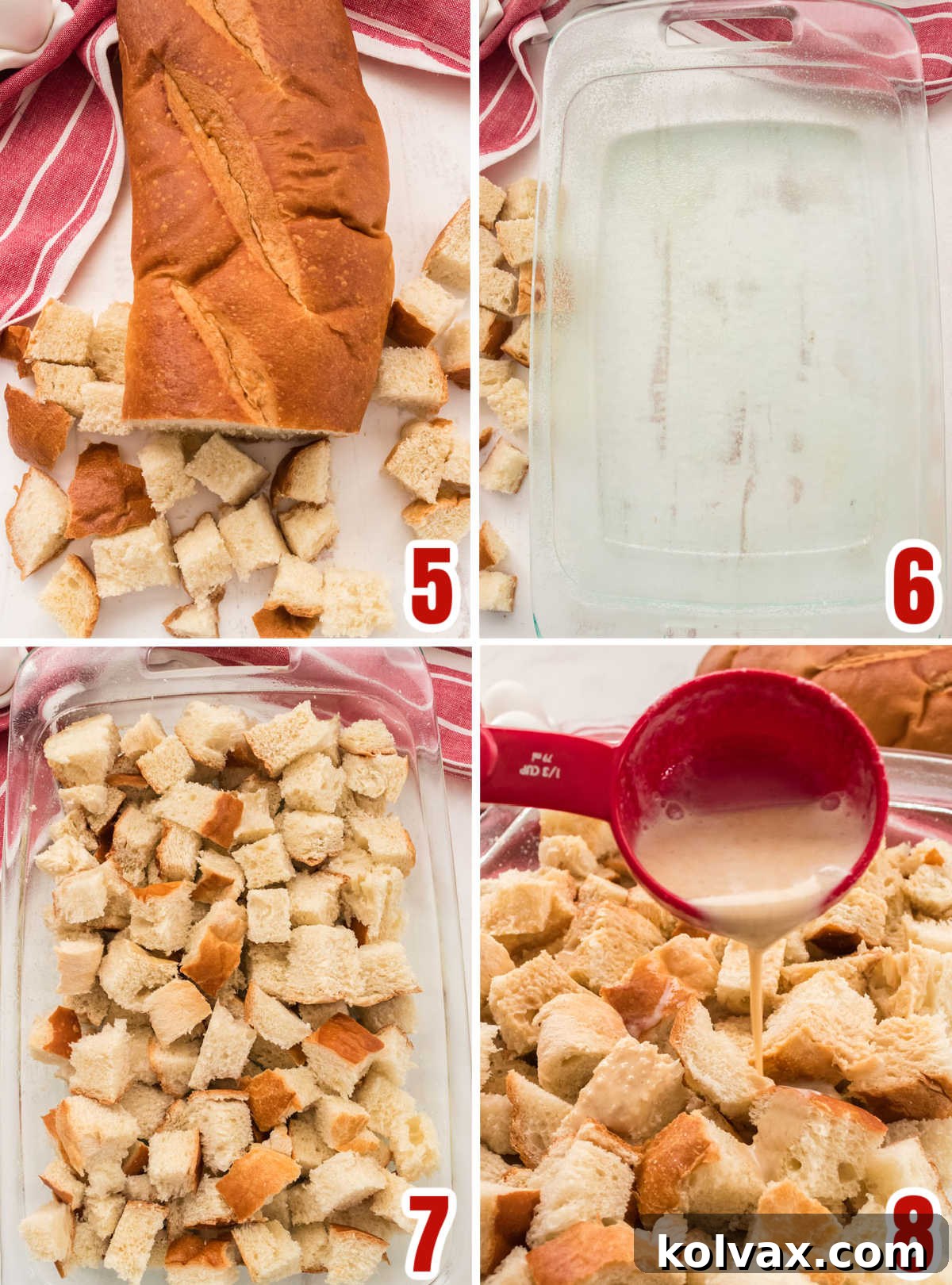
Step 5: Take your French bread loaf and cut it into bite-sized pieces, roughly 1-inch cubes. The size is important for even soaking and baking. If your bread is very fresh, you might want to let it sit out for an hour or two, or lightly toast it in the oven for 10-15 minutes to slightly dry it out. This helps it absorb the custard without disintegrating.
Step 6: Prepare a 9×14-inch baking dish by thoroughly greasing it with butter or coating it generously with baking spray. This vital step prevents the bread pudding from sticking to the dish, ensuring an easy and clean release once baked.
Step 7: Arrange the cut bread pieces evenly in the prepared baking dish. You want them to be somewhat spread out, but a slight layering is fine. This even distribution helps ensure that the custard can penetrate every piece of bread.
Step 8: Carefully pour the previously prepared egg custard mixture over the bread pieces. Make sure to distribute it evenly, gently pressing down any floating bread pieces with a spatula or spoon to ensure all the top pieces are thoroughly covered and begin to absorb the rich liquid. Let it sit for about 10-15 minutes before baking to allow the bread to soak up the custard.
Baking to Golden Perfection
The baking process is where your bread pudding truly comes to life, transforming into that golden-brown, custardy dessert we all crave. Achieving the perfect texture means baking it just long enough for the custard to set and the top to develop a beautiful crust, without drying out the interior.
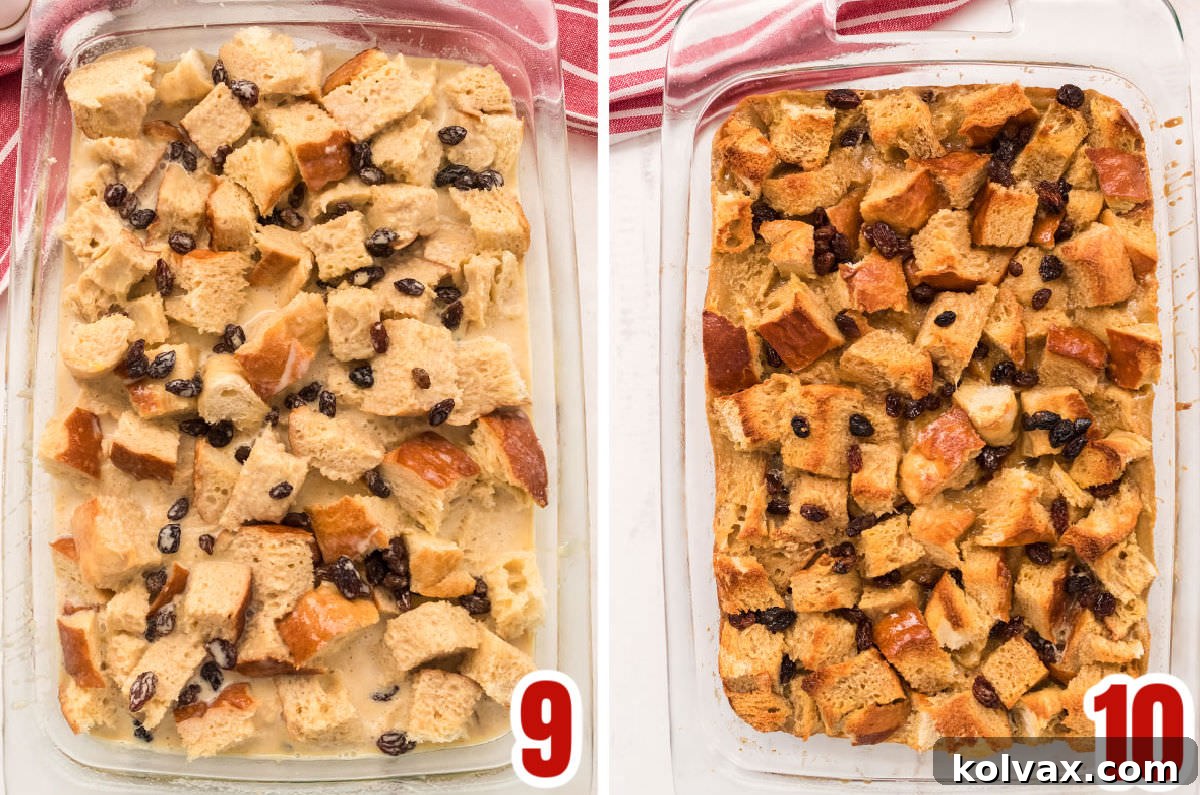
Step 9: Before placing it in the oven, generously sprinkle the raisins over the top of the bread pudding. The raisins will soften and plump up during baking, adding sweet, chewy bursts of flavor throughout the dish. If you prefer other mix-ins, such as chocolate chips or nuts, this is the ideal time to add them.
Step 10: Bake in an oven preheated to 325 degrees Fahrenheit (160 degrees Celsius) for approximately 55-60 minutes. The exact baking time may vary slightly depending on your oven, so keep an eye on it. The bread pudding is done when the top is golden brown and the custard is set. To check for doneness, insert a toothpick or a knife into the center; it should come out clean. If the top starts browning too quickly, you can loosely tent it with aluminum foil. Allow the bread pudding to cool slightly on a wire rack before serving; this helps the custard firm up further.
The Decadent Finish: Homemade Vanilla Sauce
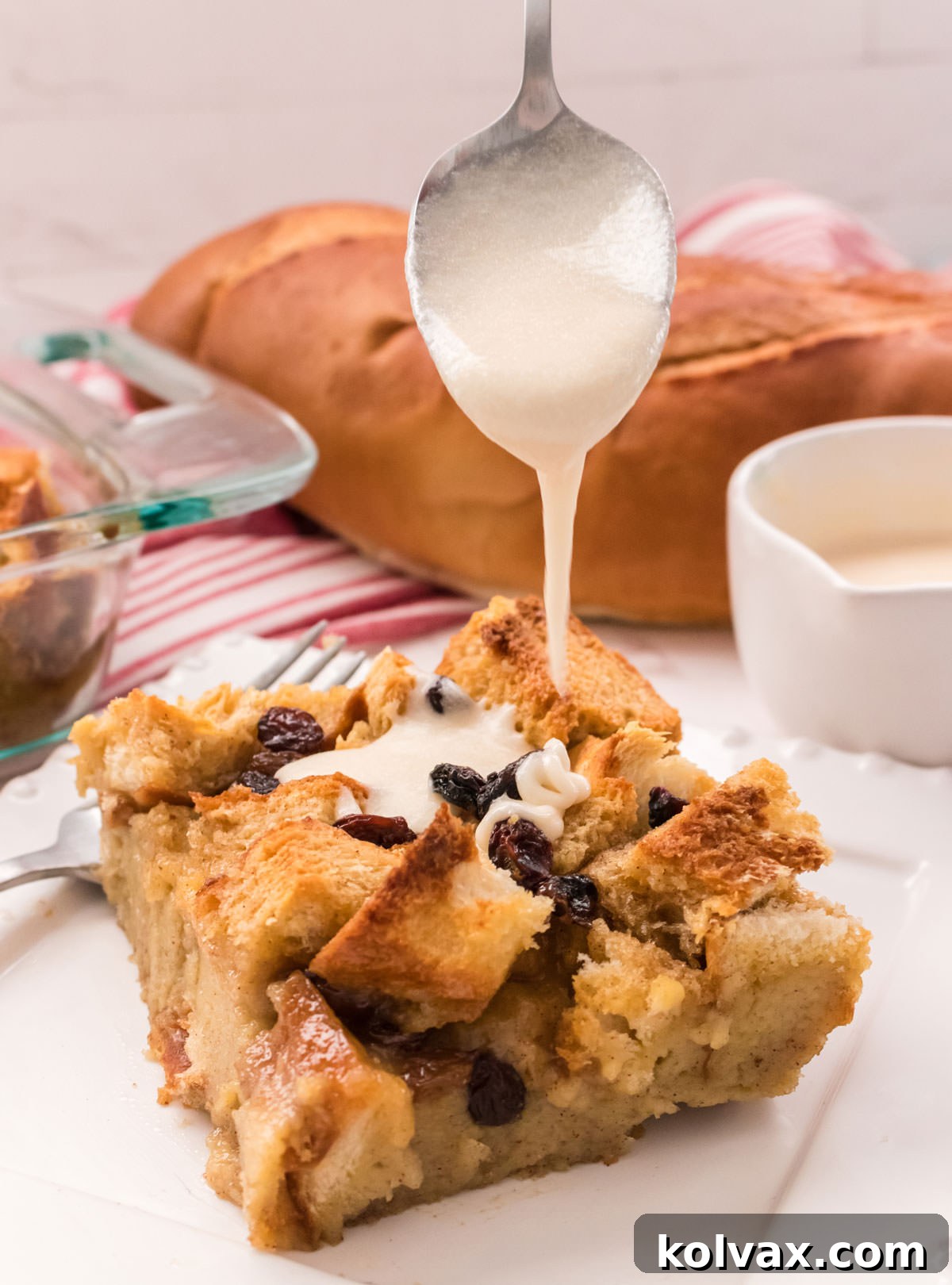
While bread pudding is delicious on its own, a warm, creamy vanilla sauce truly elevates it to an unforgettable dessert. This simple sauce adds another layer of moisture and sweetness, complementing the spiced custard beautifully. Our recipe provides a basic yet incredibly flavorful vanilla sauce that comes together in minutes. For an extra kick, consider adding a splash of rum or whiskey.
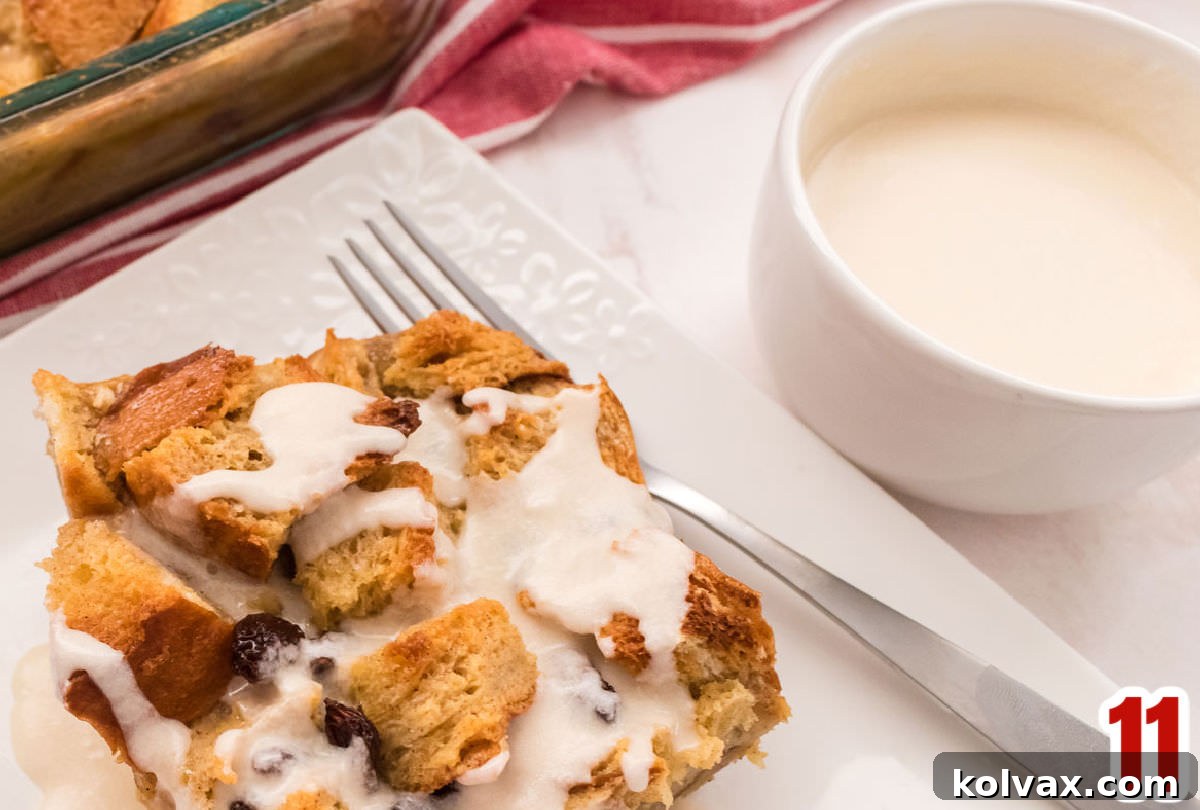
Step 11: To make a basic yet incredibly satisfying vanilla sauce, begin by melting 4 tablespoons of unsalted butter in a microwave-safe bowl. Heat it in short intervals (15-20 seconds) until fully melted but not browned.
Step 12: To the melted butter, gradually add 2 cups of powdered sugar. Stir continuously until the sugar is fully incorporated into the butter, creating a thick paste. This ensures a smooth, lump-free sauce.
Step 13: Incorporate 2 teaspoons of pure vanilla extract or rum extract for a deeper, more complex flavor. If you’re feeling adventurous, you can substitute this with a splash of your favorite spirit, such as rum or whiskey, which adds a sophisticated warmth to the sauce.
Step 14: Slowly add milk or cream, 1 tablespoon at a time, stirring well after each addition. Continue this process until the sauce reaches your desired consistency. You want it to be pourable but still thick enough to coat a spoon. A thin sauce will absorb too quickly, while a too-thick sauce might be clumpy. Taste and adjust sweetness or vanilla as needed.
Expert Tips and Frequently Asked Questions (FAQs)
Achieving the perfect bread pudding often comes down to a few key tips and understanding common questions. Here, we address some of the most frequently asked questions and offer expert advice to ensure your bread pudding is nothing short of spectacular.
Absolutely! You can store any leftover bread pudding in an airtight container in the refrigerator for 2-3 days. Due to the egg custard base, it’s crucial not to leave the bread pudding out at room temperature for longer than a couple of hours, especially in warm climates, to prevent spoilage. Reheat individual servings gently in the microwave or oven until warmed through.
The type of bread significantly impacts the pudding’s texture. You want a dense, sturdy bread that can soak up the custard without becoming too mushy. French bread loaves, often found in your local grocery store’s bakery, are an excellent choice. Other fantastic options include sourdough, challah, brioche, or ciabatta. Avoid very soft sandwich bread as it tends to break down too easily. Day-old or slightly stale bread is often preferred as it absorbs the custard more effectively than fresh bread.
Yes, bread pudding is a fantastic make-ahead dessert! You can assemble the entire dish, including pouring the custard over the bread, up to 24 hours in advance. Cover it tightly with plastic wrap and refrigerate. Before baking, let it sit at room temperature for about 30 minutes, then bake as directed. This allows the bread more time to absorb the custard, often resulting in an even more flavorful and moist pudding.
Bread pudding is incredibly versatile! You can easily customize it with various add-ins and flavorings. Consider adding chocolate chips, chopped nuts (pecans, walnuts), dried cranberries or cherries, or even fresh fruit like sliced apples or pears. For different flavor profiles, try adding a hint of nutmeg, cardamom, orange zest, or substituting vanilla extract with almond or maple extract. A popular adult variation includes a splash of bourbon or rum in the custard or the sauce.
To avoid sogginess, ensure you use dense, slightly stale bread and allow it to soak for at least 15-20 minutes before baking. Don’t overdo the cream-to-egg ratio in the custard. For dryness, ensure your oven temperature isn’t too high, which can cook the pudding too quickly and dry it out. Cover with foil if the top browns too fast. The toothpick test is key – if it comes out clean, it’s done; don’t overbake.
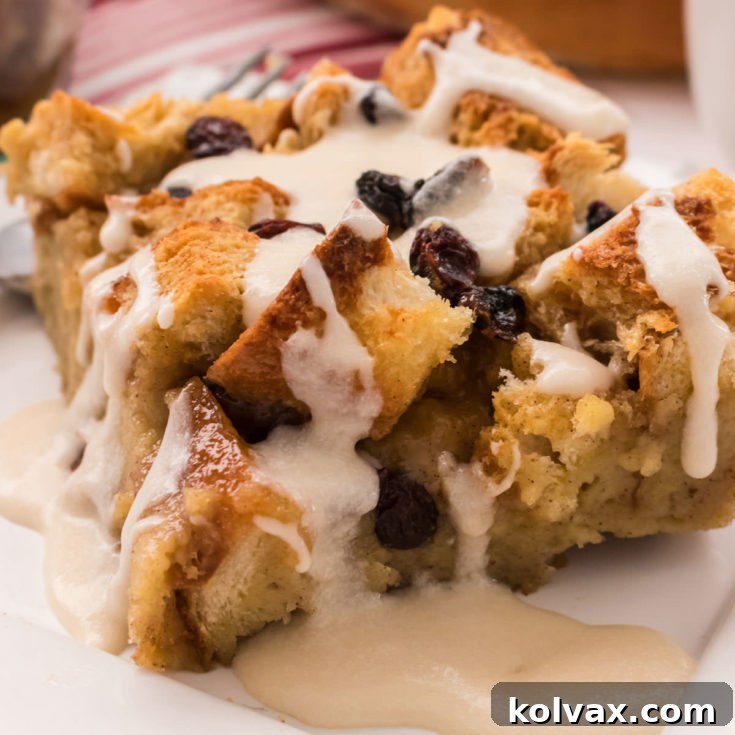
Beyond our delicious vanilla sauce, bread pudding pairs wonderfully with a variety of toppings. A scoop of vanilla bean ice cream or a dollop of freshly whipped cream is always a hit. Other great options include caramel sauce, a fruit compote (like berry or apple), or a dusting of powdered sugar. Serve it warm for the ultimate comfort experience.
Other Classic Dessert Recipes to Try
If you’re a fan of comforting, time-honored desserts like our Bread Pudding, you’ll surely love exploring more classic treats. Here are some other delightful recipes that promise to bring sweetness and joy to your table:
- English Trifle
- Banana Pudding
- Homemade Vanilla Ice Cream Recipe
- Strawberry Shortcake
Did you Make This Delicious Bread Pudding Recipe? We’d love to hear about your creation! Leave a review below to share your experience, then snap a picture and tag @twosisterscrafting on Instagram so we can admire your culinary skills!
And don’t forget to follow us on Pinterest, Facebook, and Instagram for more inspiring recipes and crafting ideas!
Print Recipe
Classic Vanilla Cinnamon Bread Pudding
12 generous servings
15 minutes
1 hour
1 hour 15 minutes
This traditional Bread Pudding recipe is the ultimate comfort food dessert, featuring delightful chunks of French bread baked into a rich, sweet custard infused with warm vanilla and aromatic cinnamon. Easy to prepare and utterly delicious, it’s perfect topped with our homemade vanilla sauce.
Ingredients List
For the Bread Pudding
- 1 large French Bread Loaf (day-old or slightly stale is best), cut into 1-inch cubes
- 8 large eggs
- 4 cups (1 quart) Heavy Whipping Cream
- 1 1/2 cups Granulated Sugar
- 2 tablespoons Pure Vanilla Extract
- 2 teaspoons Ground Cinnamon
- 1/4 cup Raisins (optional, or substitute with other dried fruits)
For the Classic Vanilla Sauce
- 4 tablespoons Unsalted Butter, melted
- 3 tablespoons Milk or Half-and-Half (or more, to reach desired consistency)
- 2 cups Powdered Sugar, sifted
- 2 teaspoons Pure Vanilla Extract (or Rum Extract for a richer flavor)
Step-by-Step Instructions
Making the Bread Pudding
- Preheat your oven to 325°F (160°C). Grease a 9×14-inch baking dish with butter or baking spray and set aside.
- In a large bowl, whisk the 8 eggs until well combined and slightly frothy.
- Add the granulated sugar, ground cinnamon, and 2 tablespoons of vanilla extract to the whisked eggs. Mix thoroughly until the sugar dissolves and the mixture is smooth.
- Pour in the heavy whipping cream and mix until the custard is completely combined. Set aside.
- Arrange the cubed French bread pieces evenly in the prepared baking dish.
- Pour the custard mixture evenly over the bread pieces, ensuring all the bread is well-coated. Gently press down any floating bread to help it absorb the custard. Let the bread soak for 15-20 minutes before baking for best results.
- Sprinkle the raisins (if using) evenly over the top of the soaked bread.
- Bake in the preheated oven for 55-60 minutes, or until the bread pudding is golden brown on top and the custard is set. A toothpick inserted into the center should come out clean. If the top browns too quickly, tent loosely with foil.
- Remove from oven and let cool slightly on a wire rack before serving warm.
Preparing the Classic Vanilla Sauce
- In a small microwave-safe bowl, melt the 4 tablespoons of butter.
- Stir in the 2 cups of sifted powdered sugar until a thick paste forms.
- Add 2 teaspoons of vanilla extract (or rum extract).
- Gradually add milk or cream, 1 tablespoon at a time, stirring well after each addition, until the sauce reaches your desired pourable consistency. Serve warm over the bread pudding.
Chef’s Notes & Tips
Storing Leftover Bread Pudding: Keep any leftovers in an airtight container in the refrigerator for up to 3 days. Due to the egg custard, avoid leaving it at room temperature for more than two hours.
Best Bread Choice: A dense, slightly stale bread like French bread, sourdough, challah, or brioche works best. It prevents the pudding from becoming too soggy and ensures good absorption of the custard.
Variations: Feel free to add chocolate chips, chopped nuts, or other dried fruits to the bread pudding. For the sauce, a splash of bourbon or rum can add an extra layer of flavor.
Made this recipe? Leave a review below, then snap a picture and tag @twosisterscrafting on Instagram so we can see it!