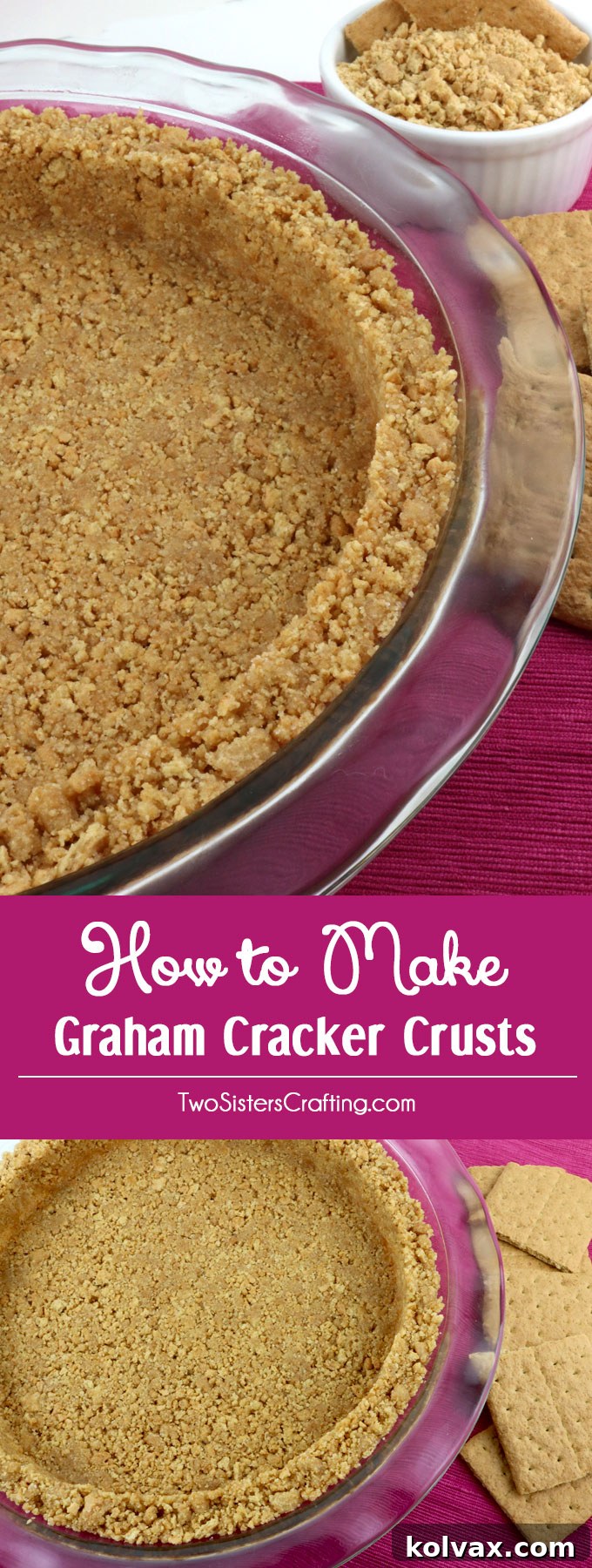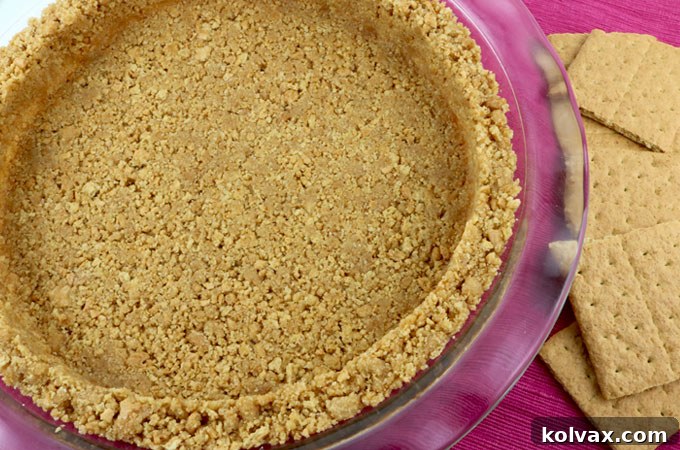
There’s a special joy that comes with baking, a culinary journey I embarked on at my mother’s side from a very young age. From mastering the art of cakes and cookies to crafting delectable candies, I’ve always felt at home in the kitchen. However, there’s one classic baking challenge that has consistently eluded me: the traditional pastry pie crust. Despite numerous attempts, my efforts often resulted in less-than-perfect, flaky disasters.
While this might sound like a setback, it actually paved the way for a delightful culinary discovery. My quest for a reliable, delicious pie base led me to embrace the wonderful world of non-traditional crusts. Among these, the Graham Cracker Crust stands out as a true champion. It’s not just a fallback; it’s a stellar choice that often outshines its traditional counterpart in ease, versatility, and flavor. In fact, given the choice, I’ll opt for a homemade Graham Cracker Crust almost every time.
If you’re seeking a foolproof, incredibly tasty foundation for your next pie, cheesecake, or tart, you’ve come to the right place. We’re about to unveil our top tips and tricks for crafting the absolute best Graham Cracker Crust you’ll ever make. Forget the store-bought versions; once you experience the rich, buttery flavor and perfect texture of this homemade recipe, you’ll never go back. Get ready to transform your desserts with this essential, easy-to-follow guide!
The Ultimate Guide to Making Perfect Graham Cracker Crusts
Why Choose a Homemade Graham Cracker Crust?
The allure of a Graham Cracker Crust goes beyond its simplicity. It offers a unique texture and flavor profile that complements a wide array of fillings, from creamy cheesecakes to tart lemon pies and rich chocolate treats. Homemade versions are a revelation compared to pre-made crusts from the grocery store. They boast a fresher, more robust graham cracker flavor, a richer buttery essence, and a customizable texture that can be soft and tender or delightfully crisp. Plus, making it yourself gives you complete control over the ingredients, ensuring a wholesome and delicious base for your desserts.
Essential Ingredients for Your Perfect Crust
One of the beauties of a Graham Cracker Crust is its minimalist ingredient list. You only need three core components to create a foundation that will elevate any dessert. Quality ingredients make a noticeable difference, so choose wisely!
- 12 Full Sheets of Graham Cracker Cookies: These are the star of our crust. Full sheets are typically divided into three smaller rectangular pieces. For a standard 9-inch pie plate, 12 full sheets will yield approximately 1 ½ cups of fine crumbs. While honey graham crackers are the classic choice, feel free to experiment with cinnamon graham crackers for an added layer of warmth and spice, or even chocolate graham crackers for a richer, darker base for chocolate or peanut butter pies.
- 1/2 cup Melted Butter (Sweet Cream, Salted): Butter is the binder that holds our crust together, imparting a rich, irresistible flavor. We recommend using good quality salted butter, as the hint of salt perfectly balances the sweetness of the crackers and sugar, enhancing the overall taste. If you only have unsalted butter, you can add a pinch of salt (about ¼ teaspoon) to the crumb mixture. Ensure your butter is fully melted and slightly cooled, but still liquid, for optimal mixing.
- 1/3 cup Granulated Sugar: Sugar not only adds sweetness but also plays a crucial role in the crust’s structure, especially if you choose to bake it. It helps to caramelize and bind the crumbs when heated, resulting in a crispier crust. For a softer, no-bake crust, it still contributes to the sweetness and helps the butter solidify around the crumbs.
Tools You’ll Need for an Easy Preparation
Gathering your tools before you begin ensures a smooth and enjoyable baking experience. Luckily, for a Graham Cracker Crust, you won’t need anything too fancy!
- 9″ Pie Plate: This is the standard size for most pies and cheesecakes. A glass or ceramic pie plate works beautifully, but a metal one is also perfectly suitable.
- Rolling Pin: Our preferred method for crushing graham crackers, as it allows for a varied crumb texture.
- Plastic Baggie (Gallon-sized, heavy-duty): Essential for crushing the crackers without making a mess and for mixing the ingredients. Alternatively, a food processor can be used.
- Measuring Cups and Spoons: For accurate ingredient proportions.
- Small Microwave-Safe Bowl or Saucepan: For melting the butter.
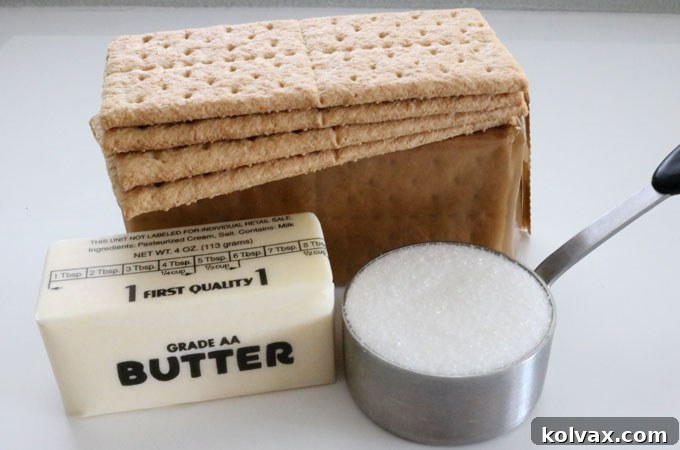
Indeed, with just these three humble ingredients – graham crackers, butter, and granulated sugar – you are on your way to creating a homemade Graham Cracker Crust that will impress every time.
Step-by-Step Instructions: Crafting Your Graham Cracker Crust
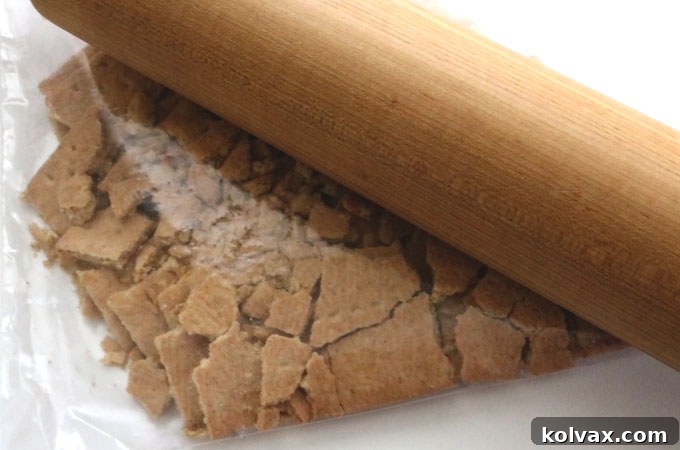
- Crush Your Graham Crackers: The Secret to Texture
Take your 12 full sheets of graham crackers and place them inside a sturdy, gallon-sized plastic bag. While a food processor can yield very fine, uniform crumbs, we have a strong preference for using a rolling pin. Crushing the crackers by hand creates a delightful mix of fine crumbs and slightly larger, more substantial pieces. This varied texture adds a wonderful depth and chewiness to the finished crust that you just don’t get with a food processor. It also allows some of the distinct graham cracker flavor to shine through more prominently. Simply lay the bag flat on a counter and roll over the crackers with your rolling pin until they reach your desired consistency. Aim for a mix, leaning towards mostly fine crumbs with some small, pea-sized pieces remaining.
- Add the Sugar: Sweetness and Structure
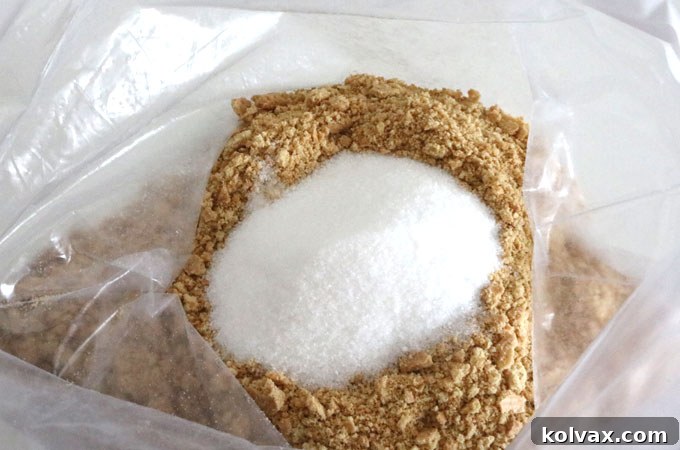
Once your graham crackers are perfectly crushed, open the plastic bag and pour in the 1/3 cup of granulated sugar. The crumbs at this stage should have a beautiful, varied texture – some superfine, others slightly larger, creating that ideal base we talked about. The sugar will not only sweeten the crust but, as mentioned, will also play a crucial role in binding the crumbs, especially if you decide to bake your crust.
- Combine Dry Ingredients: Shake It Up!
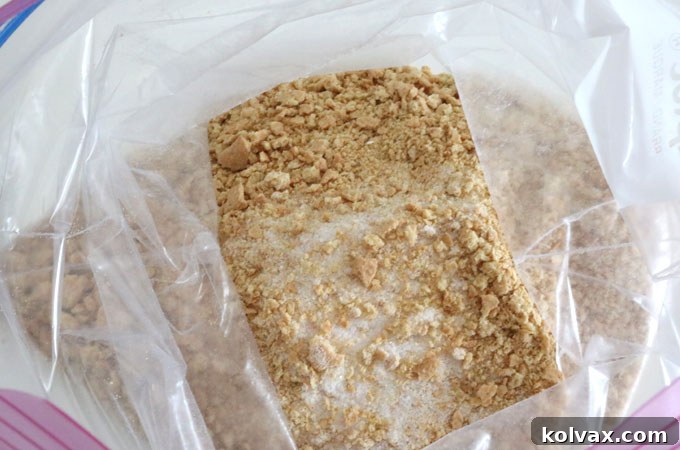
Seal the plastic bag tightly, making sure to push out any excess air. Now, give it a good shake! Tumble and toss the bag until the graham cracker crumbs and sugar are thoroughly combined. You want an even distribution of sugar throughout the crumbs so every bite of your crust is perfectly sweet.
- Introduce the Butter: The Magical Binder
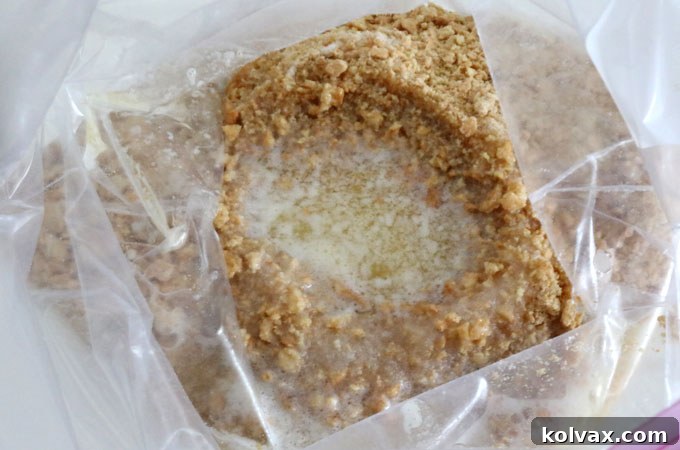
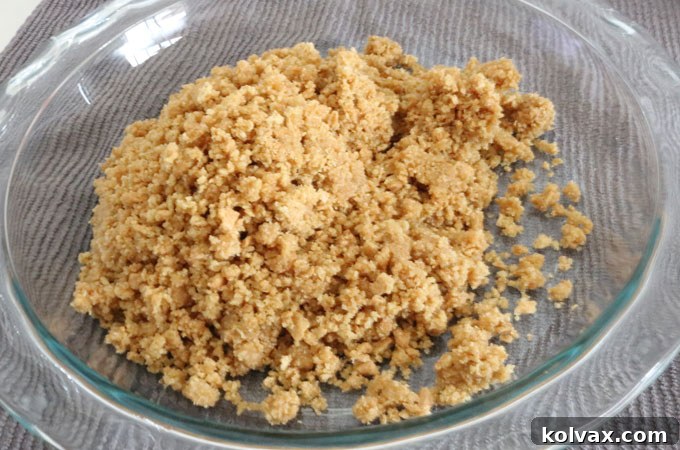
It’s time for the binding agent! Carefully pour the ½ cup of melted butter into the plastic bag with the crumb mixture. Once the butter is in, reseal the bag. Now, using your hands, massage the bag from the outside, working the melted butter into the graham cracker and sugar mixture. Continue massaging until all the crumbs are uniformly moistened. They should resemble wet sand – clumping together when squeezed, but still loose enough to pour. This step is incredibly easy and surprisingly satisfying!
- Transfer to Pie Plate: Ready for Forming
Once your crumbs are perfectly buttered and mixed, pour the entire mixture into your 9-inch pie plate. At this point, it will look like a loose pile of crumbs, but don’t worry, we’re about to transform it into a solid crust.
- Press and Mold: The Key to a Sturdy Crust
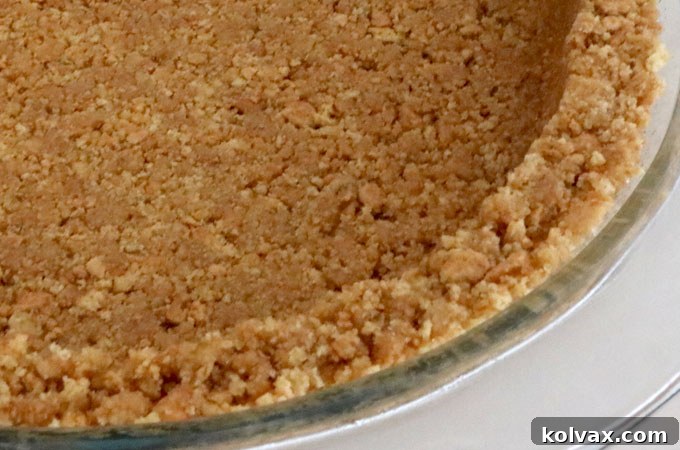
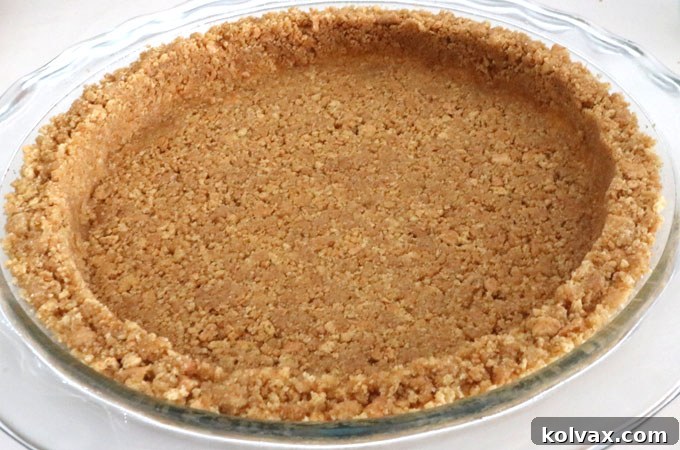
This step is crucial for the integrity of your finished crust. Begin by evenly spreading the crumbs across the bottom of the pie plate. Then, using the flat bottom of your ½ cup measuring cup, a sturdy glass, or even your clean hands, firmly press the crumbs down onto the bottom of the plate. Once the bottom is compacted, work your way up the sides, pressing the crumbs against the edges of the pie plate to form a cohesive wall. The more tightly and evenly you pack the crumbs, the better your crust will hold its shape when sliced and served. Pay special attention to the corners and the rim to create a clean, defined edge.
Bake or No-Bake: The Ultimate Choice for Your Graham Cracker Crust
This is the age-old question that often arises when making a Graham Cracker Crust: to bake or not to bake? Both methods yield fantastic results, but they offer distinct textures and are best suited for different types of fillings. Let’s explore the advantages of each:
The No-Bake Method: Soft, Buttery & Effortless
We almost exclusively opt for the no-bake method for our Graham Cracker Crusts, and here’s why. After firmly pressing the crumbs into the pie plate, we refrigerate the crust for at least a couple of hours, or ideally, until the butter has completely firmed up. During this refrigeration process, the melted butter solidifies, acting as a powerful binder that holds the crust together beautifully without any baking. A refrigerated Graham Cracker Crust typically results in a softer, more tender, and incredibly buttery texture. We find this method produces a richer, more melt-in-your-mouth experience that truly lets the flavor of the graham crackers and butter shine.
- How to do it: Simply place the tightly packed crust in the refrigerator for a minimum of 2 hours, or until firm.
- Best for: No-bake cheesecakes, ice cream pies, chilled pudding pies, or any filling that doesn’t require baking. It’s also perfect for hot summer days when you want to avoid turning on the oven.
- Benefits: Softer texture, more pronounced butter flavor, less effort, no oven required.
The Baked Method: Crisp, Crunchy & Golden
If you prefer a crust with a bit more crunch and a deeper, toasted flavor, then baking is the way to go. The baking process transforms the crust, making it sturdier and more resistant to sogginess, which can be beneficial for certain moist fillings. When baked, the granulated sugar in the mixture slightly caramelizes, creating an even stronger bond between the crumbs and contributing to that delightful crispness.
- How to do it: Preheat your oven to 350°F (175°C). Place the pie plate with the pressed crust on a baking sheet (to catch any potential drips and make it easier to transfer) and bake for 8 to 10 minutes. Keep a close eye on it to prevent burning. The edges should be lightly golden, and the crust should smell fragrant. Remove from the oven and let it cool completely on a wire rack before adding your filling.
- Best for: Baked cheesecakes, pumpkin pies, custard pies, or any filling that will also be baked, as this method helps prevent the crust from becoming soggy.
- Benefits: Crunchier texture, deeper toasted flavor, sturdier crust, less prone to sogginess with wet fillings.
Whether you choose to chill or bake, both methods will provide a phenomenal base for your dessert. Experiment to find your personal favorite!
Pro Tips for the Best Graham Cracker Crust
- Don’t Skimp on Butter: The butter is crucial for flavor and binding. Using slightly less butter might make the crust crumbly.
- Pack it Tightly: A firmly pressed crust is a sturdy crust. Use the back of a spoon or a flat-bottomed glass if a measuring cup isn’t giving you enough leverage. The firmer it’s packed, the less likely it is to fall apart.
- Even Thickness: Try to achieve an even thickness across the bottom and up the sides. This ensures uniform cooking (if baked) and consistent texture.
- Flavor Variations: Get creative! Add a teaspoon of cinnamon, a pinch of nutmeg, or even a tablespoon of cocoa powder to your dry crumbs before adding butter for different flavor profiles. A little citrus zest can also add a delightful aroma and taste.
- Preventing Soggy Bottoms (for baked crusts): If using a particularly moist filling, brush the inside of your baked and cooled crust with a thin layer of melted white chocolate or a whisked egg white before adding the filling and baking. This creates a barrier against moisture.
- Storage: An unbaked or baked graham cracker crust can be prepared a day or two in advance and stored covered in the refrigerator. This is a great time-saver when preparing for a special occasion.
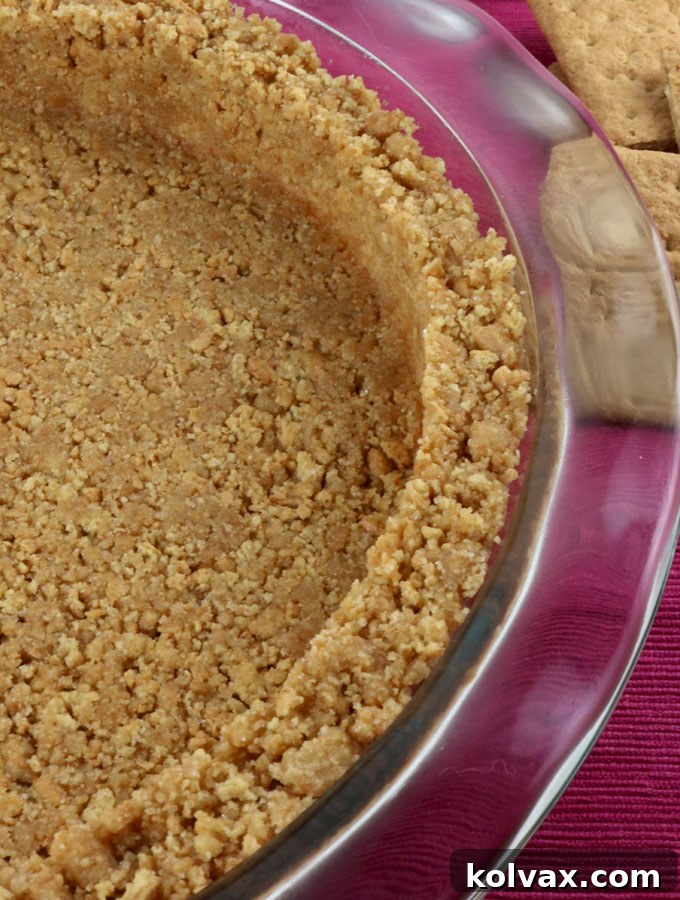
Graham Cracker Crusts are, without a doubt, one of my most cherished types of pie crusts. They embody everything a great dessert base should be: incredibly easy to make, versatile, and packed with flavor. The difference between a homemade version and anything you can pick up at the grocery store is truly incomparable – the homemade simply tastes a thousand times better, richer, and more authentic.
We wholeheartedly encourage you to give this simple yet spectacular recipe a try. It’s a game-changer for any home baker, whether you’re a seasoned pro or just starting your culinary adventures. Once you experience the ease and deliciousness of a perfectly crafted homemade Graham Cracker Crust, you’ll find yourself reaching for this recipe again and again. It’s perfect for cheesecakes, key lime pies, chocolate cream pies, and countless other delightful desserts. Pin this perfect Graham Cracker Crust recipe for later, and follow us for more amazing pie crust ideas and dessert inspirations!