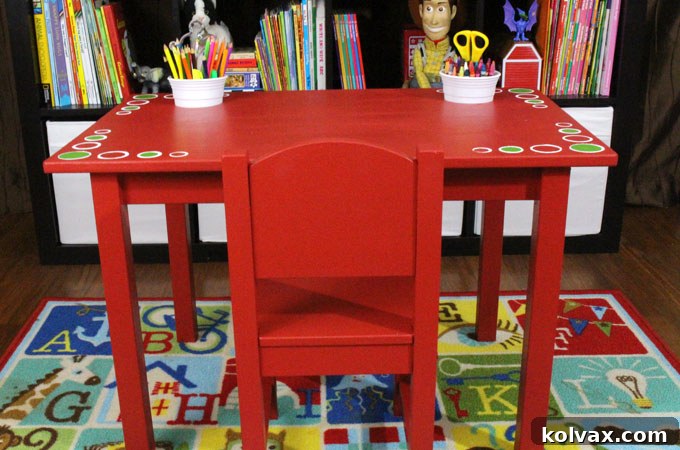
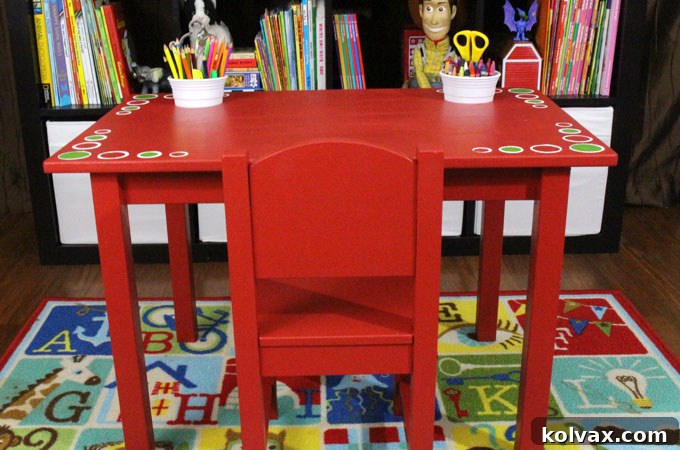
There’s a unique magic in transforming something old into something wonderfully new, especially when it’s for our children. We’ve always believed that a splash of paint holds incredible power—it can completely revolutionize a space, breathing fresh life into tired furniture and igniting imagination. With the right tools and a little dedication, even a complete room makeover can be a rewarding afternoon project. This philosophy became our guiding principle when our daughter began kindergarten, sparking the idea to create a vibrant, functional, and personal DIY Kid’s Homework Desk.
Our choice for this exciting transformation was a well-loved Ikea Sundvik kids’ table and chairs set. Over the years, this humble table had been a battlefield for countless art projects, a launchpad for imaginative games, and a witness to endless playdough creations. It bore the honorable scars of childhood adventures. Instead of replacing it, we saw an opportunity for an Ikea Sundvik transformation—a chance to repaint, refurbish, and repurpose it into the perfect dedicated kids’ study area and creative hub. The result? A stunning homemade kids’ desk that truly exceeded our expectations! This project proves that with a dash of creativity and some elbow grease, you can create a personalized, inspiring space for your child’s learning journey without breaking the bank.
Create Your Own DIY Kid’s Homework Desk: An Easy Ikea Sundvik Hack
Embarking on a DIY project for your child’s space is not just about saving money; it’s about infusing love and personality into their environment. This budget-friendly kids’ furniture project takes a standard Ikea Sundvik table and elevates it into a customized homework station. Here’s everything you’ll need to bring this creative vision to life in a single weekend.
Materials You Will Need:
- Kids’ Table: Specifically, an Ikea Sundvik kid’s table and chairs (or a similar sturdy, wooden children’s table).
- Plastic Cups: Two standard plastic cups that will fit snugly into drilled holes for pencil caddies.
- Interior Home Paint: 1 quart of durable, low-VOC interior paint in your chosen primary color. We opted for a vibrant red called “Red My Mind.”
- Crafting Paint: Small bottles of white and green acrylic craft paint for embellishments.
- Nylon Paint Brush: One 1.5-inch nylon brush for smooth application of the main paint color.
- Dauber Crafting Paint Brushes: A set of daubers (e.g., Martha Stewart or similar) for creating decorative circles.
- Painting Tarp or Drop Cloth: Essential for protecting your workspace from spills and splatters.
- Sanding Paper: Medium-grit (around 120-150 grit) and fine-grit (220 grit) sandpaper for preparing the surface.
- Electric Drill: A standard electric drill for making holes.
- Hole Saw Drill Bit: A hole saw bit sized to match the diameter of your plastic cups.
- Safety Glasses: Crucial for eye protection during drilling and sanding.
- Damp Cloth: For wiping down surfaces before and after sanding.
- Popsicle Sticks (Optional): Useful as spacers for consistent embellishment design.
Before the Transformation: A Well-Loved Ikea Sundvik Table
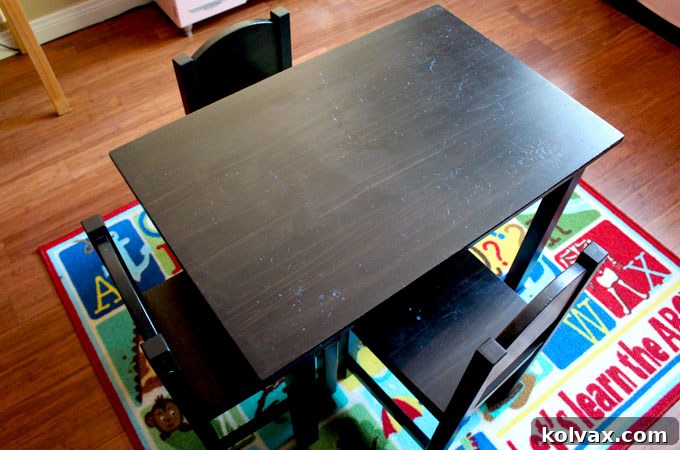
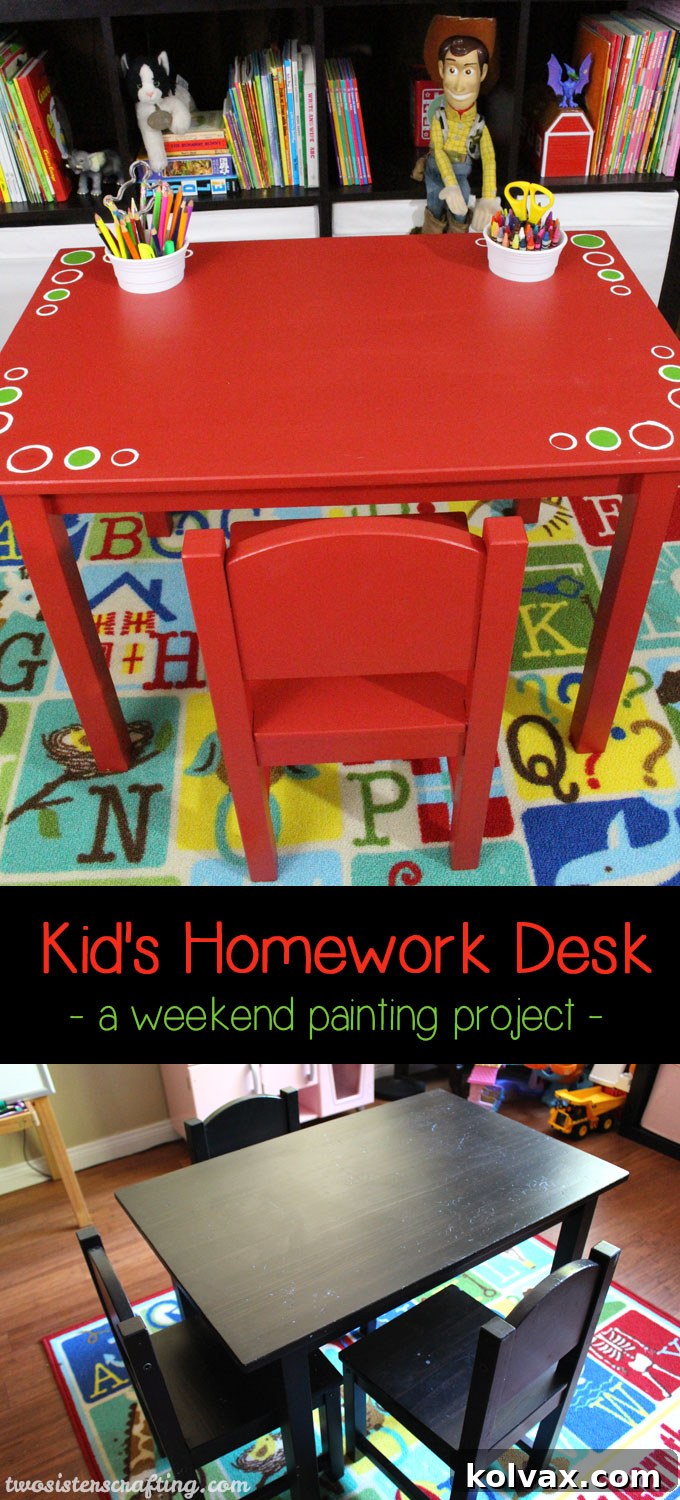
Every great makeover starts with a “before” picture, and our Ikea Sundvik kid’s table and chairs were certainly ready for their close-up. As you can see, this robust little set had seen its fair share of love. The surface bore the marks of countless coloring sessions, imaginative playdough sculptures, and lively board games. While visibly scratched and a bit worn, the core structure remained solid. Both Laurie and I recognized its inherent durability and knew it still had many years of happy service left to give – provided we gave it a much-needed refresh. This is the beauty of Ikea hack ideas: taking functional, affordable furniture and customizing it to extend its life and perfectly suit your evolving needs. Let the painting fun and DIY home project begin!
Step 1: Selecting Your Perfect Paint Color

The first and arguably most exciting step in any painting project is choosing the new color. For our kids’ homework desk makeover, we wanted a shade that was both cheerful and stimulating, reflecting the vibrant energy of a child’s imagination. Our existing ABC rug served as the perfect inspiration, guiding us towards a palette of bright, saturated hues. A Friday night trip to Home Depot yielded a delightful array of swatches, but one color truly captured our hearts: a stunning, bold red named “Red My Mind.” When selecting paint for children’s furniture, consider low-VOC (Volatile Organic Compound) options for a healthier indoor environment. High-quality interior paints offer excellent durability, making them ideal for furniture that will see frequent use. A great color choice not only transforms the look but also sets the mood for creativity and learning in your child’s personalized workspace.
Step 2: Adding an Innovative Built-In Storage Solution
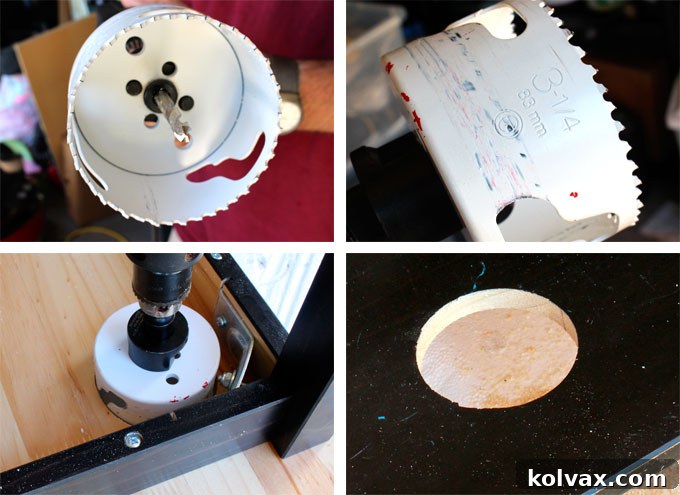
Before diving into the vibrant world of paint, we planned a crucial modification to enhance the functionality of our kids’ desk organization. We envisioned integrated supply caddies to keep crayons, pencils, and scissors neatly organized and easily accessible. To achieve this, we utilized a hole saw drill bit to create two perfectly circular openings in the tabletop. This step requires precision and safety. First, carefully measure and mark the desired locations for your holes, ensuring they are symmetrically placed and don’t interfere with the table’s structural integrity. Wearing safety glasses is paramount during this process.
Once the circular pieces of wood were cut out, we meticulously sanded down the rough edges of the newly formed holes. This ensures a smooth finish and prevents any snags or splinters, making the desk safe for little hands. The entire drilling and sanding process for both holes was surprisingly straightforward, taking approximately 15 minutes. This simple yet effective modification instantly elevates the Ikea Sundvik from a basic table to a highly functional children’s study area with clever built-in storage, making clean-up a breeze and encouraging organized habits.
Step 3: Preparing the Surface for a Flawless Finish
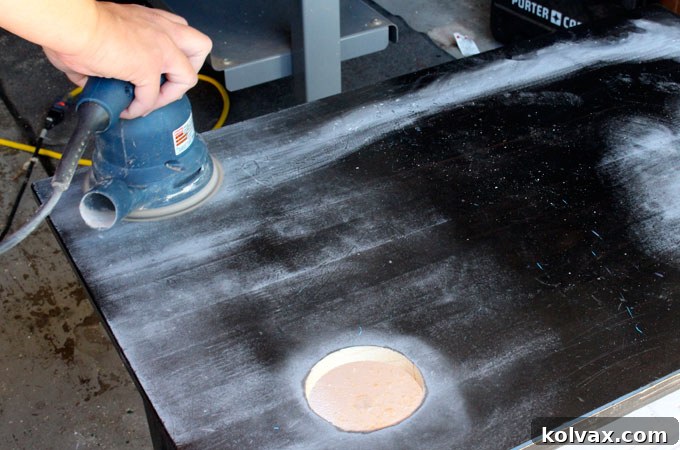
Proper surface preparation is the secret to any successful painting project, especially when transforming a well-used piece of furniture like our Ikea Sundvik repaint. We began by giving the entire table a thorough yet light sanding. Using medium-grit sandpaper (120-150 grit) first helps to smooth out any existing surface scrapes, dings, and imperfections, creating an even foundation. Follow this with a fine-grit sandpaper (220 grit) to achieve a super smooth finish. This crucial step also creates a slightly textured surface, giving the new paint something optimal to “grab” onto, ensuring better adhesion and a longer-lasting finish. Without adequate sanding, paint can peel or chip prematurely.
After sanding, it’s vital to remove all dust and debris. We meticulously wiped down the table with a damp cloth, ensuring no sanding dust remained, as this can interfere with paint adhesion and create an uneven texture. We then allowed the table to dry completely while we set up our designated painting area. This included laying down a painting tarp or drop cloth to protect the floor and ensuring good ventilation by opening windows. Taking these preparatory steps ensures that your DIY kids’ desk project will have a professional-looking, durable finish.
Step 4: Bringing Color to Life – The Painting Process
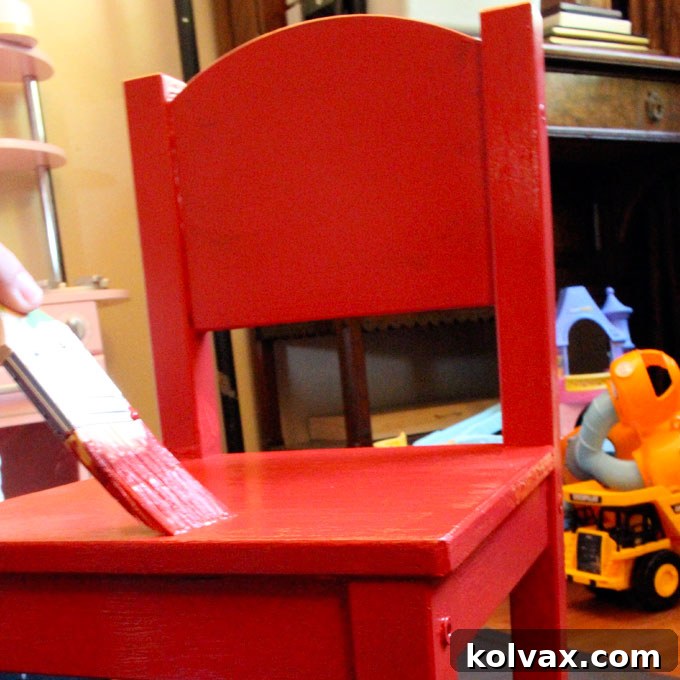
With the surface prepped and the area protected, it was time for the most visually rewarding part: applying the paint! Before opening the can, ensure your paint is thoroughly stirred. This helps to redistribute the pigments and ensure consistent color throughout. We poured a small amount of our chosen “Red My Mind” paint into a plastic cup for easy access, dipping our 1.5-inch nylon brush. The nylon brush is ideal for smooth application and minimizes brush marks, perfect for achieving a sleek finish on furniture.
We applied the paint in thin, even coats, working methodically across the tabletop and then moving to the legs and chairs. It’s always better to apply two to three thin coats than one thick coat, as thick coats are prone to drips, uneven drying, and can obscure details. For the chairs, we carefully painted each spindle and surface, ensuring complete coverage. After the first coat, we allowed ample drying time. Despite the initial appearance, patience during drying between coats is key for optimal adhesion and a smooth final look.
Step 5: Patience is Key – Drying Time
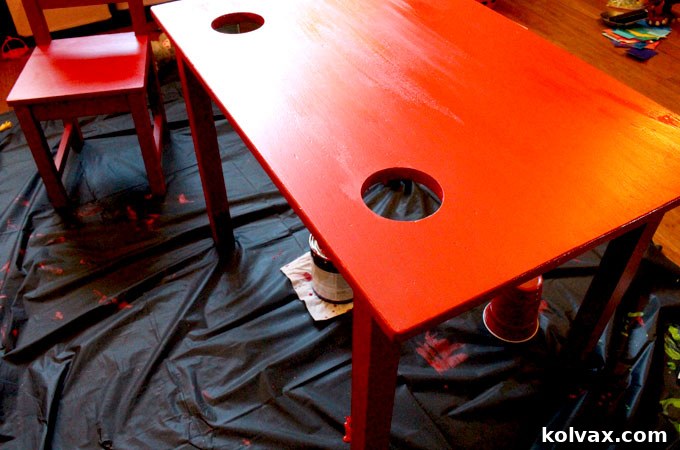
One of the greatest satisfactions of using modern, high-quality interior paints is their relatively fast drying time. Our newly painted table was dry to the touch within a single hour, which made the project move along swiftly. However, “dry to the touch” doesn’t mean fully cured. While you can handle it gently after an hour, it’s important to allow several hours (or even overnight, depending on humidity and paint type) before applying subsequent coats or moving on to embellishments. This ensures that the paint has properly bonded and won’t lift or smudge when you add the next layers or decorations. We used this drying time to clean our brushes, tidy the workspace, and plan our creative embellishments for the personalized kids’ desk. Always refer to the paint manufacturer’s instructions for specific recoat times.
Step 6: Unleashing Creativity with Decorative Embellishments
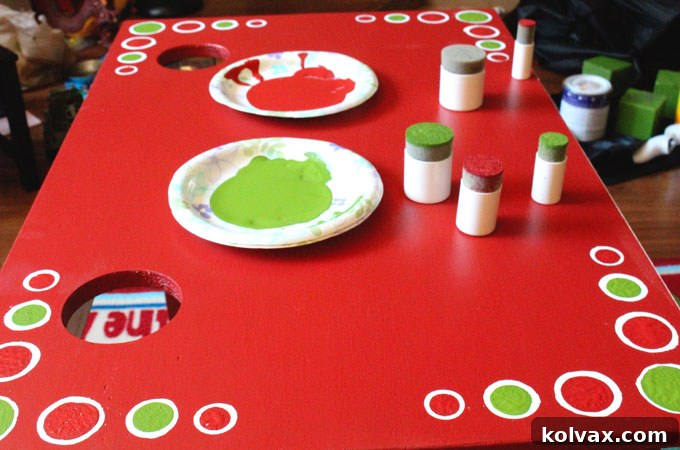
Once the primary red paint was completely dry and cured, it was time to add the fun, personalized touches that truly make this a custom kids’ furniture piece. We decided on a playful polka-dot design using a Martha Stewart Paint Dauber set (any similar craft daubers will work beautifully). These daubers make creating perfectly round circles incredibly easy, even for beginners.
To ensure a consistent and appealing design, we carefully planned out our pattern. We used simple popsicle sticks as spacers, placing them between each intended circle to achieve uniform gaps and symmetry. First, we dipped a larger dauber into white craft paint and created a series of bold white circles across the tabletop. Once these were slightly dry, we took a smaller dauber and, using the main red paint and a contrasting green craft paint, added smaller concentric circles within the white ones. This layering effect adds depth and visual interest, making the design pop. Don’t be afraid to experiment with different colors and patterns! Stencils, hand-painted motifs, or even decals can also be wonderful ways to personalize your kids’ creative space and reflect your child’s interests. This step allows you to truly make the desk one-of-a-kind.
Step 7: The Final Touch – Integrated Pencil Caddies
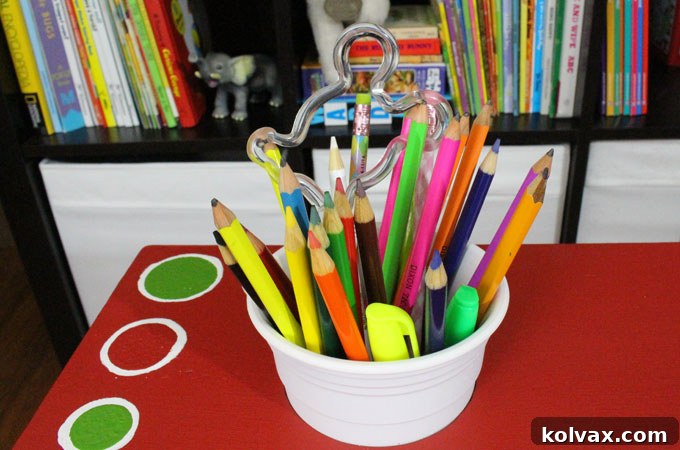
With the paint fully dry and the embellishments shining, the final step was to install our ingenious storage solution. We simply dropped the two plastic cups into the holes we drilled earlier. And voilà! Instant, perfectly integrated pencil and crayon caddies. This simple addition not only adds a vibrant pop of color but also provides a practical and incredibly convenient way for our daughter to keep all her art supplies and homework essentials neatly organized. No more rummaging through drawers or losing pencils! This feature makes the homework station setup incredibly efficient and tidy, encouraging better organization habits from a young age.
The Finished Masterpiece: A Functional & Inspiring Kids’ Desk
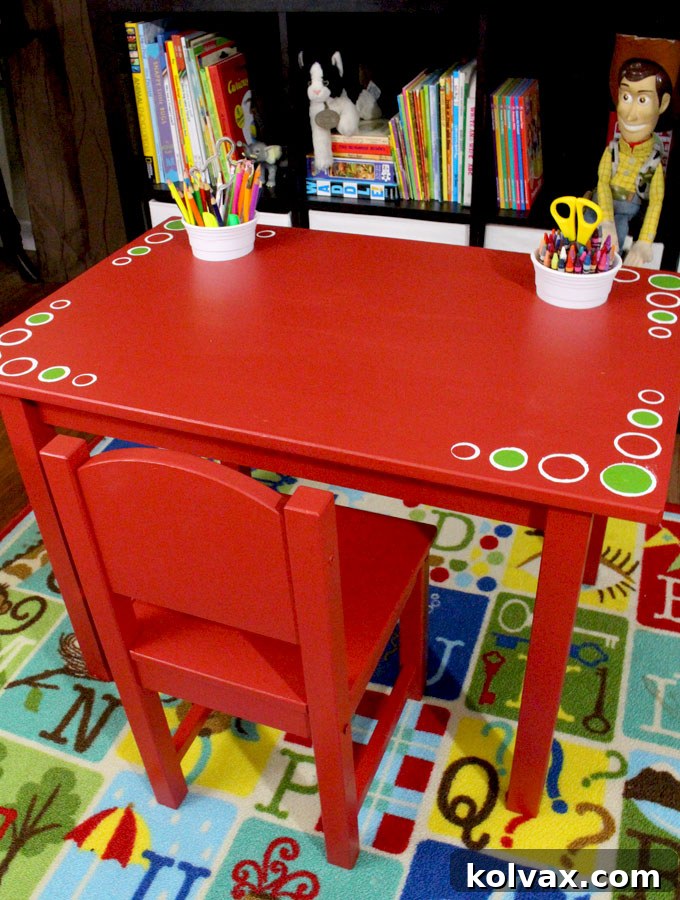
We couldn’t be happier with how our DIY Kid’s Homework Desk turned out. This project, which began as a simple idea to repurpose an old table, culminated in a truly charming and highly functional piece of furniture. It was a fun, relatively easy weekend painting project that delivered immense satisfaction. The transformation from a tired, scratched Ikea Sundvik table to a vibrant, personalized homework station is remarkable.
But the best part? Our daughter absolutely adores her new desk. It has quickly become her favorite spot for tackling homework assignments, drawing colorful pictures, and engaging in all sorts of creative play. Having a dedicated, inviting space tailored just for her has made a significant difference in her enthusiasm for learning and her ability to focus.
Why an Ikea Hack is Perfect for Kids’ Furniture
Ikea furniture is a popular choice for families due to its affordability, modularity, and clean design. However, its mass-produced nature sometimes leaves parents wanting a touch more personality or specific functionality. This is where the magic of an Ikea hack for kids comes in. Repurposing or customizing an Ikea piece, like we did with the Sundvik table, offers numerous advantages:
- Cost-Effectiveness: Instead of buying a brand new, often expensive, specialized children’s desk, you can breathe new life into an existing or second-hand Ikea item at a fraction of the cost.
- Durability: Many Ikea pieces, like the Sundvik, are built to withstand the rigors of child’s play, making them excellent candidates for a refresh rather than replacement.
- Personalization: A DIY project allows you to choose colors, patterns, and features that perfectly match your child’s personality, room decor, and specific needs. It’s furniture that grows with them, or at least adapts to their current stage.
- Environmental Friendliness: Repurposing furniture is a sustainable choice, reducing waste and extending the lifespan of an item.
- Sense of Accomplishment: There’s immense satisfaction in creating something beautiful and functional with your own hands, and it’s a great way to model creativity and resourcefulness for your children.
- Integrated Solutions: Hacks allow for clever additions like the built-in cup caddies, providing smart kids’ desk storage that off-the-shelf options might not offer.
Tips for Your Own Ikea Sundvik Desk Project
- Involve Your Child: Let your child help pick the colors or design the embellishments. This makes the desk truly theirs and fosters a sense of ownership.
- Ventilation is Key: Always work in a well-ventilated area when painting to minimize inhaling fumes.
- Read Paint Instructions: Pay close attention to the paint manufacturer’s recommendations for drying times, recoating, and proper cleanup.
- Consider a Primer: If your original table is very dark or has a notoriously slick surface, a coat of primer before painting can significantly improve adhesion and coverage.
- Seal for Durability: For extra protection against wear and tear, especially on a child’s desk, consider applying a clear, non-toxic topcoat or sealant after the paint has fully cured.
- Test Before You Commit: If you’re unsure about a color or embellishment technique, test it on an inconspicuous area or a scrap piece of wood first.
- Safety First: Always wear safety glasses when drilling or sanding, and keep children away from tools and paint during the active project phases.
Conclusion: Transform and Inspire with a DIY Homework Desk
This Ikea Sundvik desk hack truly exemplifies how a simple DIY approach can yield remarkable results. We started with a humble, well-used children’s table and, through the power of paint and a few clever modifications, transformed it into an inspiring, organized, and highly functional children’s homework station. It’s more than just a desk; it’s a dedicated space where creativity can flourish and learning becomes an inviting adventure.
If you have an old piece of furniture that’s seen better days, or if you’re looking for a personalized solution for your child’s study needs, we wholeheartedly encourage you to embark on your own DIY furniture makeover. Projects like these are not only incredibly rewarding but also an excellent way to create bespoke pieces that perfectly fit your home and family. Gather your tools, pick your colors, and get ready to transform! Follow us for more great DIY Home Project Ideas and share your own inspired creations. Happy hacking!