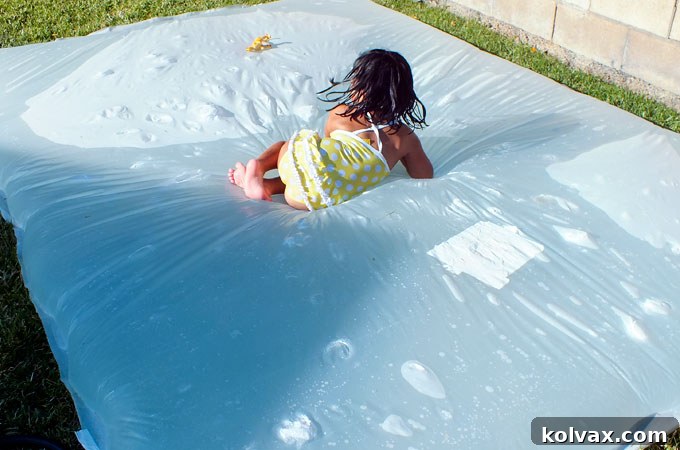
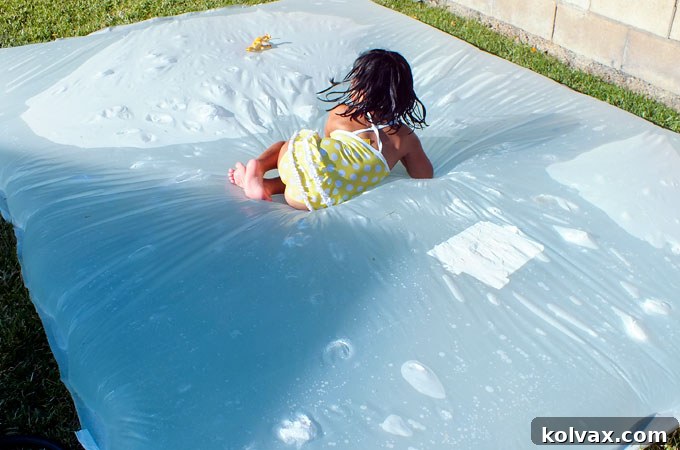
Pinterest has truly revolutionized the way we discover creative ideas, especially when it comes to engaging activities for children. It’s a treasure trove of inspiration, offering a seemingly endless stream of innovative crafts, games, and projects designed to spark joy and keep little ones entertained. If you’ve ever delved into kid-related searches on the platform, particularly over recent seasons, you’ve undoubtedly stumbled upon the vibrant, intriguing pins featuring DIY Water Blobs. These oversized, squishy water mattresses promise hours of bouncy, splashy fun, often depicted with multiple happy children frolicking without a care.
Intrigued by the widespread popularity and the glowing reviews, we decided to incorporate a water blob into our Frozen Birthday Party. Our vision was to create an enchanting “Arendelle Ice Pond” activity station, an immersive experience that would transport our young guests straight into the magical world of Elsa and Anna. The concept felt perfect for a summer party, offering a cool respite and a unique play opportunity. Every guide and tutorial we read online lauded the simplicity of making these water blobs and guaranteed boundless entertainment for kids. Armed with enthusiasm and a roll of plastic sheeting, we embarked on our DIY adventure.
Thankfully, we had the foresight to set up our “Arendelle Ice Pond” the night before the main event. This pre-party test run proved to be invaluable, as our water blob experience didn’t quite live up to the glossy, idealized images we had seen on Pinterest. In fact, it unveiled a series of unexpected challenges and revelations that prompted us to conduct our very own “Water Blob Pinterest Fact Check.” Before you get swept away by the hype and plan your next big party around this viral kid’s craft, take a moment to explore our honest, detailed account. We’re here to give you the unvarnished truth about making, maintaining, and enjoying these popular backyard water features, helping you decide if a DIY water blob is truly the right fit for your family’s summer fun.
DIY Water Blobs: Are They Really That Easy to Make?
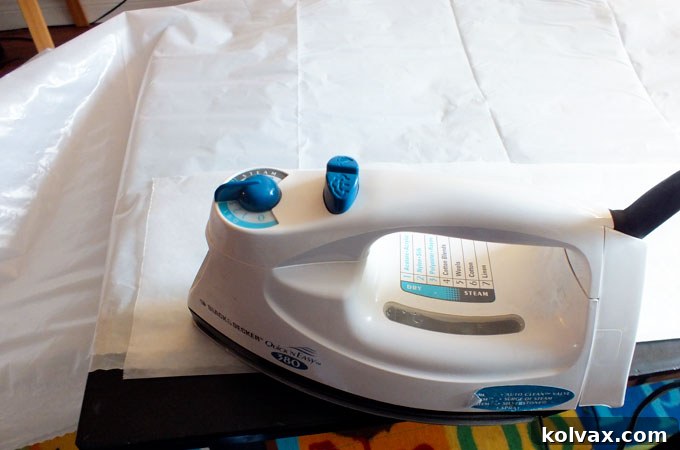
When it comes to the initial assembly, we must concede that the online consensus holds true: DIY water blobs are indeed remarkably easy to construct. The process itself is straightforward and requires minimal specialized tools or skills. Our chosen material was a 3.5 mil thick, 10′ x 25′ piece of plastic sheeting, a common and readily available item at most hardware stores. The core technique involves simply folding the large sheet in half to create a double layer, then carefully sealing the edges to form a watertight pouch.
For the sealing process, we opted for the commonly recommended method: using an iron to melt the plastic edges together. This creates a surprisingly strong and secure seam, effectively fusing the two layers of plastic. The trick is to apply consistent, even heat without overheating the plastic, which could lead to holes or weak spots. With a little care and patience, we found this step to be quite manageable. In under 30 minutes from the moment we unrolled the plastic sheeting from its package, our water blob was fully formed and ready for the next crucial step: filling it with water. This quick turnaround from raw material to finished container definitely scored high on the “easy to make” scale, giving us a false sense of accomplishment for what lay ahead.
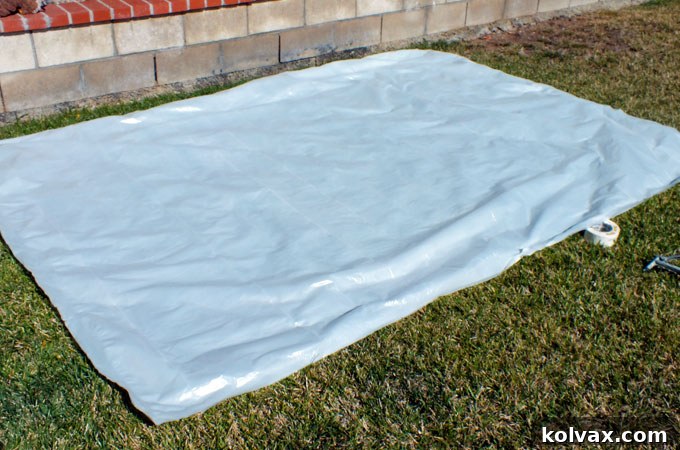
Our water blob, once folded and sealed, measured a substantial 10′ x 12.5′. While not claiming to be the largest water blob ever created, it certainly promised a generous play area. However, the sheer volume of water required to fill it was an immediate and eye-opening revelation. We are currently experiencing a significant drought in California, and as the hose ran, continuously gushing water into the plastic enclosure, a deep sense of guilt began to creep in. It took an astonishing amount of water, far more than we had anticipated, to even partially fill the blob. After a solid 20 minutes of constant filling, the blob was still far from its optimal bouncy state. This often-overlooked aspect of water blob creation is a critical consideration for anyone living in areas with water conservation concerns, or simply those mindful of their water usage. Be prepared for a substantial investment in water and time before any play can begin.
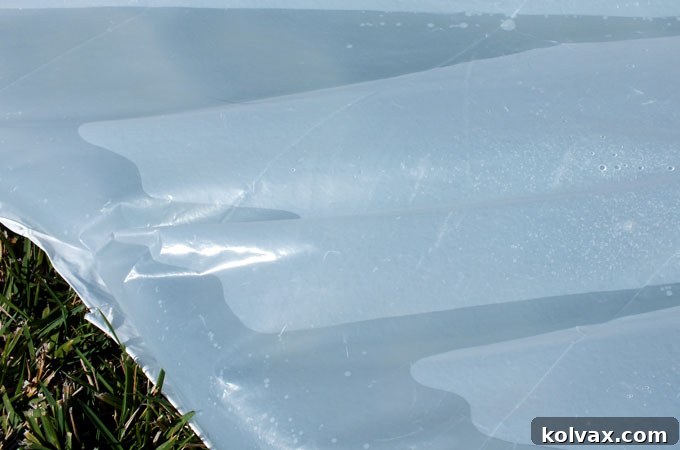
Beyond the surprising water consumption, another peculiar challenge emerged during the filling process: the formation of a gigantic air pocket. Despite our efforts to guide the water flow evenly, a considerable amount of air became trapped within the plastic sheeting, creating a large, unyielding bubble that persisted even after the blob was filled. This unexpected air pocket significantly diminished the blob’s intended fun factor, transforming what should have been a soft, yielding surface into a lumpy, uneven playground. It made it difficult for our daughter to move freely and bounce, as the air bubble dominated a large section of the blob, refusing to disperse.
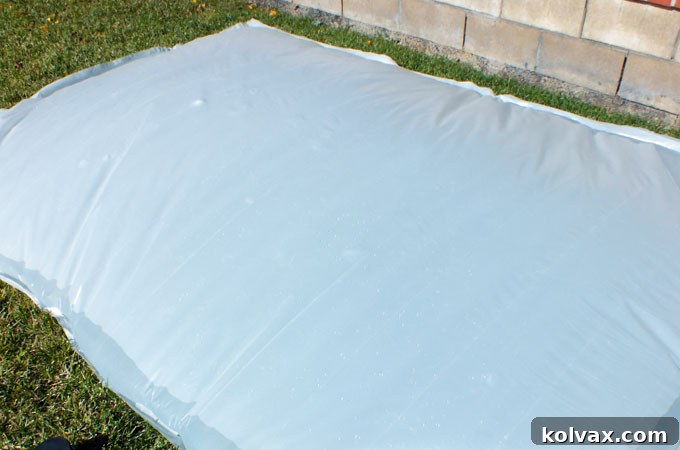
Removing this stubborn air pocket proved to be an unexpected and rather amusing ordeal. The only solution, as it turned out, was for Nancy, Allison, and myself to physically get onto the partially filled water blob and roll around, pushing the trapped air towards the opening we used for filling. This was a surprisingly strenuous and time-consuming task, requiring a fair bit of coordination and effort. Imagine three adults awkwardly wriggling and pushing on a giant, wobbly water mattress – it certainly wasn’t the glamorous start to our party prep! Unfortunately, no photos exist of this spectacle, which is probably for the best. This unforeseen step added significant time and exertion to the setup, turning a supposedly “easy” project into a minor wrestling match against an inflatable adversary. It highlighted a crucial detail often omitted from DIY tutorials: while making the pouch is simple, preparing it for optimal play can present its own unique set of challenges.
DIY Water Blobs: Do They Actually Work as Promised?
The core promise of the water blob, as vividly portrayed across countless Pinterest pins, is that of a durable, bouncy bed of water where multiple children can frolic, jump, and flop around in joyous abandon. Every image showcases a vibrant scene of kids laughing, playing together, and seemingly effortlessly interacting with this giant water cushion. This is precisely where our carefully constructed water blob fell tragically short of expectations. The reality of its performance in an actual play scenario was a stark contrast to the idealized vision.
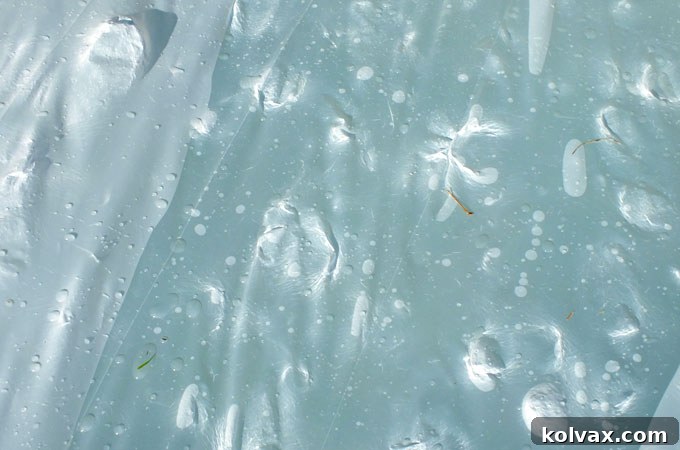
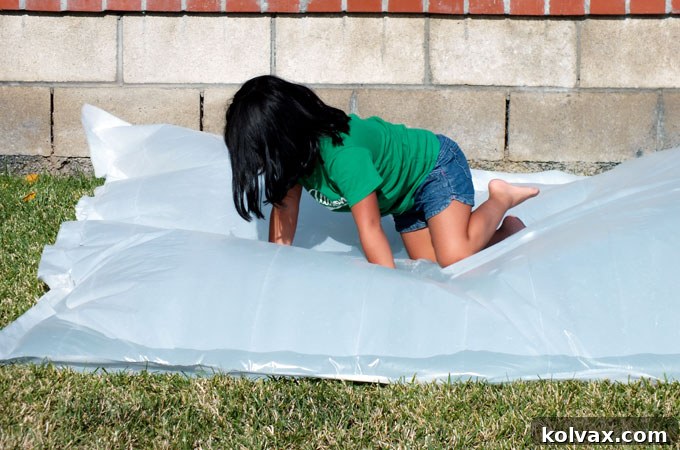
Our initial durability test began with Allison, our petite four-year-old, tentatively exploring the water blob. Within a mere five minutes of gentle play, her tiny feet had already created numerous visible scuff marks across the surface of the plastic. This immediate wear and tear were concerning, suggesting that the 3.5 mil plastic, while seemingly robust, was far too thin to withstand even minimal friction. Minutes later, the inevitable happened: Allison accidentally poked her fingers through one of these compromised spots, creating a distinct, gushing hole in the top of the water blob. Our “Arendelle Ice Pond” was already springing a leak, and the party hadn’t even started!
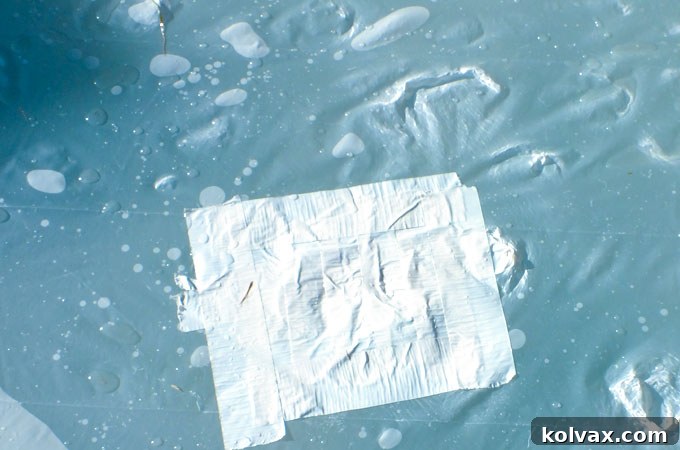
Reacting quickly, I grabbed a roll of trusty Duck Tape, a staple in any DIY enthusiast’s arsenal, and managed to patch up the hole before too much water escaped. For a moment, it seemed like a successful emergency repair. However, this was merely a temporary reprieve. Shortly after, a new barrage of tiny pinprick holes began to appear, not just in random spots, but alarmingly, along the heat-sealed seams and on the underside of the blob. These leaks were far more insidious and widespread, suggesting a fundamental weakness in the plastic’s ability to hold up under the internal pressure of the water and external pressure of play. I diligently applied more Duck Tape, but it quickly became an exercise in futility. There were simply too many leaks cropping up too fast to effectively contain the water.
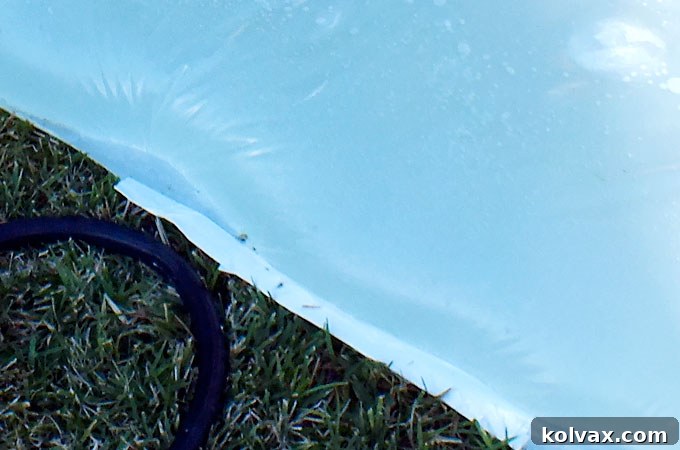
The state of our water blob after a mere fifteen minutes of play with just one small child was utterly disheartening. The once pristine surface was now a patchwork of tape and wet spots, and water was steadily seeping out from multiple points. It was at this critical juncture that we made the difficult but necessary decision to scrap our “Arendelle Ice Pond” activity station. There was absolutely no way this delicate water blob, already failing under minimal use, could possibly withstand the enthusiastic jumping and running of multiple children during a birthday party. The safety risk, combined with the certainty of a rapid and complete failure, made it an untenable option. Our Pinterest dream had turned into a deflated, soggy reality.
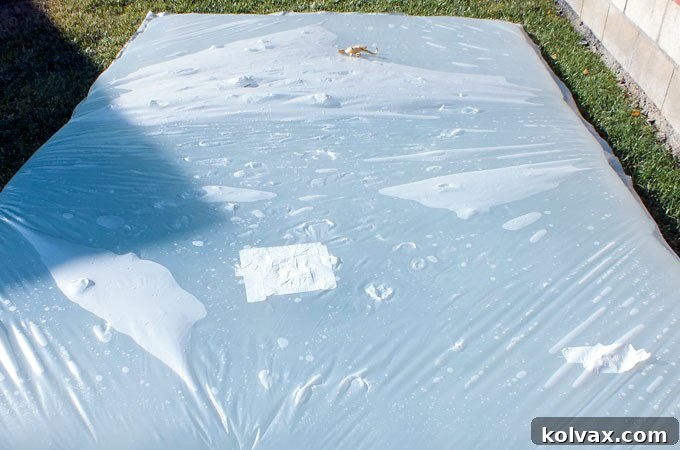
Another crucial detail often missing from those alluring Pinterest visuals is the undeniable fact that a water blob is, without question, a wet activity requiring swimsuits. Even before the major leaks started, water began to leach through the plastic itself, making the surface damp. With the addition of pinprick holes and larger tears, Allison was thoroughly soaked after just a few minutes of play. This isn’t merely a “splash zone”; it’s a full-on water activity, and participants will get wet. This means preparing not only for wet children but also for potentially wet surrounding areas, which could be an issue if placed near delicate landscaping or indoor spaces.

So, do DIY water blobs truly work as advertised? The answer, regrettably, is a qualified “Ummm… sort of?” For one or perhaps two very small, gentle children, it might offer an hour or so of unique entertainment. This is, however, contingent on an adult standing by with a roll of Duck Tape, ready to patch up new holes as they inevitably appear. But for a group of kids, or for older, more energetic children, the answer is a resounding “no way!” The seams would almost certainly burst, or the plastic would tear extensively, leading to a catastrophic deluge of water in very short order. The fragility of the standard plastic sheeting simply cannot withstand the dynamic forces of enthusiastic play.
Are DIY Water Blobs Really Fun for Kids?
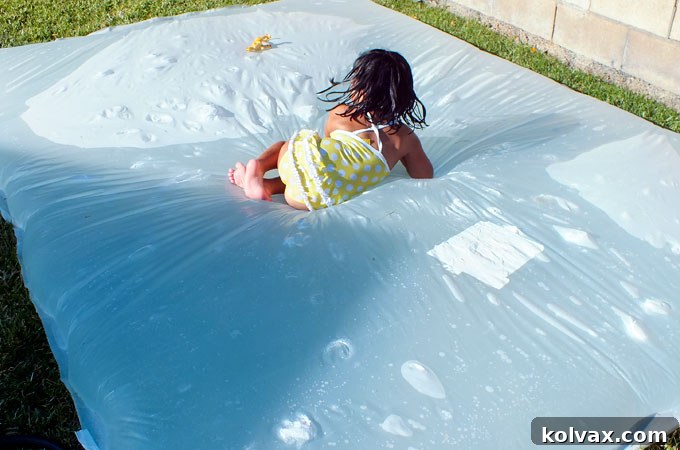
Despite the considerable challenges and disappointments encountered during its brief lifespan, we can honestly say that yes, water blobs are inherently fun. Allison absolutely adored the experience, even with its rapidly deteriorating condition. There’s an undeniable novelty and sensory appeal to bobbing and squishing around on a giant bed of water. Nancy and I even gave it a try, and we found the sensation surprisingly relaxing, reminiscent of the water beds popular in the 80s. The gentle undulation of the water beneath you creates a soothing, almost meditative experience that’s quite distinct from other outdoor play equipment.
If we were planning another water-themed party, or simply looking for a unique backyard activity on a scorching summer day, we might consider trying a water blob again. However, our previous experience has provided invaluable lessons. The primary takeaway is that the durability of the plastic sheeting is paramount. Our 3.5 mil plastic sheet, while costing a modest $10, proved to be woefully inadequate for anything beyond the most delicate interaction. To truly enjoy a water blob and potentially extend its lifespan, we would strongly advise spending the extra money to purchase significantly thicker plastic sheeting. A 6 mil sheet, typically around $20, would offer a much-needed boost in resilience against tears and scuffs. Some enthusiasts even recommend industrial-grade plastic sheeting or pond liners for maximum durability, though these can be more costly and harder to seal.
Beyond the thickness of the plastic, careful preparation of the ground underneath is also crucial. Any sharp pebbles, twigs, or uneven surfaces can easily puncture thinner plastic, leading to instant leaks. Laying a thick tarp or even a layer of old blankets beneath the water blob could help protect its delicate underside. Furthermore, establishing clear rules for play – such as no jumping, no sharp objects, and limiting the number of children at one time – could help preserve the water blob for a slightly longer period. Ultimately, while the concept of a water blob offers undeniable fun, it comes with a significant caveat: achieving that fun requires an investment in quality materials and careful maintenance, far beyond what typical Pinterest tutorials often suggest. It’s a project that demands patience, a willingness to troubleshoot, and perhaps a backup activity, just in case your blob doesn’t quite hold up to the summer’s excitement.