Mastering Homemade Frosting: Your Ultimate FAQ Guide from Two Sisters
Are you striving for that perfect swirl, that velvety smooth texture, or simply consistent results with your homemade frosting? Crafting delicious frosting is an art that can sometimes present its own set of challenges. Whether you’re a seasoned baker or just starting out, questions about consistency, storage, and application are common. At Two Sisters, we understand these baking dilemmas and are here to equip you with the knowledge and confidence to conquer your frosting fears.
We’ve gathered the most frequently asked questions about our beloved Two Sisters’ Frosting recipes and compiled a comprehensive guide to help you achieve frosting perfection every single time. From understanding ingredient roles to troubleshooting common issues and mastering storage, this guide is your go-to resource. Dive in to unlock the secrets behind consistently beautiful and delectable frosting!
Essential Frosting Troubleshooting & Tips from Two Sisters
We believe that every baker deserves to experience the joy of creating exquisite desserts. This section addresses your most pressing frosting inquiries, offering clear, actionable advice to refine your technique and elevate your creations. Still have a burning question after reading through? Don’t hesitate to leave your query in the comment section below – we’re always here to help!
How Much Frosting Will I Need for My Baking Projects? Understanding Frosting Yields
Determining the right amount of frosting is crucial for seamless baking. While the exact quantity can vary based on your personal application style—how thickly or thinly you spread it, or the complexity of your decorations—we’ve established some reliable guidelines based on our Two Sisters’ Frosting recipes.
Cake Coverage Guidelines:
- Sheet Cakes: Our standard frosting recipe typically yields enough to generously cover a 9″ x 13″ sheet cake. This allows for a smooth, even layer across the top and sides, with a little extra for simple border decorations if desired.
- Layer Cakes: For a classic two-layer 8″ round cake, one batch of our frosting is usually sufficient. This will cover both layers, the top, and the sides beautifully, providing that elegant finish you’re looking for. If you plan on intricate piping or a very thick layer, you might consider making an additional half-batch.
Cupcake Frosting Estimates:
Cupcakes offer more flexibility in frosting application, which in turn affects the yield:
- Knife Application: If you prefer to spread the frosting with a knife for a simple, rustic look, one recipe batch should comfortably frost approximately 24 standard-sized cupcakes. This method uses less frosting per cupcake, making your batch stretch further.
- Piping Bag & Swirls: For those impressive, bakery-style swirls achieved with a pastry bag and decorative tip, the yield will be slightly less. Depending on the size and height of your swirls, one batch of frosting will typically cover 15-18 cupcakes. Larger, more dramatic swirls will naturally consume more frosting, so adjust your expectations or prepare an extra half-batch if you’re aiming for show-stopping decorations on all two dozen cupcakes.
Remember, these are general guidelines. If you’re planning a particularly elaborate design or prefer a very generous layer of frosting, it’s always a good idea to err on the side of caution and have a little extra on hand. You can always freeze surplus frosting for future projects!
Does Homemade Frosting Need to Be Refrigerated? Storing Buttercream Safely
The question of refrigeration is a common one, especially when planning ahead or wondering about leftovers. Generally, our Two Sisters’ recommendation is to refrigerate your homemade buttercream frosting to ensure its freshness and integrity.
Buttercream frosting, especially recipes containing dairy products like milk or cream, and butter, benefits from refrigeration. This helps prevent spoilage and maintains its texture. Stored in an airtight container in the refrigerator, our buttercream frosting will remain fresh and delicious for three to five days.
However, there’s a little leeway for short-term situations. If your frosted cakes or cupcakes are only going to be out for an overnight period, they should typically be fine. We’ve certainly left cupcakes out overnight before without issues, particularly if they are kept in a cool room and in an airtight container. The key here is “airtight” – this protects the frosting from drying out and absorbing odors, as well as minimizing exposure to air and potential contaminants. For extended periods, or if your kitchen is particularly warm, refrigeration is always the safest bet.
When you’re ready to use refrigerated frosting, remember to take it out of the fridge a few hours beforehand. This allows it to come back to room temperature, which is essential for achieving that smooth, spreadable consistency. Once at room temperature, give it a good re-whip with your mixer to restore its fluffy texture before applying.
My Frosting is Too Thin! Common Causes and Troubleshooting Tips
A frosting that’s too thin can quickly derail your decorating plans, leaving you with runny drips instead of perfect peaks. This is a very common issue, but often easily fixed once you understand the root cause. Here are the main culprits and how to correct them:
The Culprit: Warm Temperatures
- Warm Kitchen Environment: If you’re baking on a particularly hot day or your kitchen is warm, the butter in your frosting can soften too much, leading to a thinner consistency.
- Over-Softened Butter: While soft butter is crucial for creamy frosting, butter that’s too soft or even slightly melted will result in a greasy, thin, and often soupy frosting. If you’re softening butter in the microwave, be extra careful! It should only be slightly soft to the touch, not melted or greasy. The ideal “room temperature” butter means it yields slightly when pressed, but still holds its shape.
The Fix: If you suspect warm temperatures or over-softened butter are the cause, try placing your bowl of frosting in the refrigerator for 10-15 minutes. This will help the butter firm up. Once chilled, remove it and re-whip it with your mixer. You might be surprised at how quickly it transforms into a thicker, more workable consistency.
The Culprit: Too Much Liquid
- Excess Milk or Cream: Adding too much liquid (milk, cream, or even extract) too quickly or too generously is another primary reason for thin frosting.
The Fix: The straightforward solution here is to gradually add more powdered sugar, a tablespoon at a time, while mixing, until your frosting reaches the desired thickness. Powdered sugar is the primary thickener in most buttercream recipes, and adding more will absorb excess liquid and firm up the frosting.
Proactive Tips to Prevent Thin Frosting:
- Start with Correctly Softened Butter: Avoid microwaving butter into a melted state. Let it sit at room temperature for an hour or two, or if you must use the microwave, heat it in very short bursts (5-10 seconds) until it’s just slightly pliable.
- Add Liquid Gradually: After you’ve creamed your butter and powdered sugar, begin adding milk or cream just a teaspoon at a time. Mix thoroughly after each addition and assess the consistency before adding more. Sometimes, depending on the humidity and the type of butter, you might not even need all the milk specified in the recipe. Trust your judgment and your mixer!
- Sift Your Powdered Sugar: Sifting removes lumps and ensures a smoother, more consistent texture, which can contribute to better overall frosting stability.
By understanding these factors and applying these simple fixes, you’ll be able to rescue a thin frosting and achieve that perfect, pipeable consistency.
Can You Make Frosting Ahead of Time? The Ultimate Time-Saving Hack
Absolutely! Making frosting ahead of time is one of our favorite baking hacks and a fantastic way to streamline your kitchen process, especially when preparing for events or busy baking days. Our buttercream frosting recipes are quite robust and hold up beautifully when stored correctly.
How to Store Frosting Ahead of Time:
- Refrigeration: You can prepare our buttercream frosting and store it in an airtight container in the refrigerator for an impressive three to five days. Ensure the container is truly airtight to prevent the frosting from drying out, absorbing refrigerator odors, or developing a crust.
Preparing Frosting for Use After Storage:
This step is critical for achieving the ideal consistency after refrigeration:
- Bring to Room Temperature: Before you plan to use your refrigerated frosting, take it out of the fridge a few hours beforehand. It needs to come up to a soft, pliable room temperature. Attempting to use cold frosting will result in a stiff, difficult-to-spread, and potentially lumpy texture.
- Re-Whip It: Once the frosting has reached room temperature, transfer it to the bowl of your stand mixer (or use a hand mixer). Beat it on medium-low speed for a few minutes until it becomes light, fluffy, and smooth again. This re-whipping process incorporates air back into the frosting, restoring its original silky texture and making it easy to spread or pipe. If it still seems a little stiff, you can add a tiny splash of milk or cream (1/2 teaspoon at a time) while re-whipping until it reaches your desired consistency.
By following these steps, you’ll enjoy the convenience of make-ahead frosting without sacrificing quality or texture.
Can You Freeze Extra Frosting? A Baker’s Best Friend
Yes, absolutely! Freezing extra frosting is one of the best ways to minimize waste and ensure you always have delicious buttercream on hand for last-minute treats or future baking projects. At Two Sisters, we do it all the time – it’s a true game-changer for efficient baking.
How to Freeze Frosting:
- Airtight Storage: Transfer your leftover buttercream frosting into a freezer-safe, airtight container or a heavy-duty freezer bag. Squeeze out as much air as possible from freezer bags to prevent freezer burn.
- Label and Date: Always label your container with the type of frosting and the date it was frozen. This helps you keep track of your stash.
- Freezer Duration: Properly stored buttercream can last in the freezer for up to one month without significant loss of quality. Some bakers successfully freeze it for longer, but for best taste and texture, we recommend using it within a month.
How to Thaw and Prepare Frozen Frosting:
- Thaw in the Refrigerator: When you’re ready to use your frozen frosting, transfer it from the freezer to the refrigerator and let it thaw overnight. Avoid thawing at room temperature as it can compromise the texture and safety.
- Bring to Room Temperature: Once thawed in the fridge, take the frosting out and let it come to room temperature for a couple of hours, just as you would with refrigerated frosting.
- Re-Whip: This is the most crucial step! After thawing and coming to room temperature, the frosting will likely look a bit lumpy, deflated, or even separated. Don’t worry, this is normal. Place the frosting in your stand mixer bowl (or use a hand mixer) and beat it on medium speed for several minutes. It will gradually transform back into a smooth, fluffy, and perfectly pipeable consistency. If it seems too stiff, you can add a tiny amount of milk or cream (1/2 teaspoon at a time) until it reaches your desired texture.
Freezing extra frosting is an incredibly convenient practice that ensures you’re always prepared for your next baking adventure, saving you time and effort.
Will My Frosting Harden or Crust Up? Understanding Buttercream Textures
The texture of frosting after it sets is an important consideration for both aesthetics and handling. Our classic Two Sisters’ buttercream frosting will not harden to the brittle, candy-like consistency of royal icing. Royal icing is designed to dry completely firm, creating a hard shell that’s perfect for intricate, durable decorations.
However, our buttercream frosting will form a slight crust on the exterior when exposed to air. This “crusting” means that the outermost layer of the frosting will dry slightly, becoming firm enough that it won’t readily smudge or stick to your finger if lightly touched. The interior of the frosting, however, will remain soft, creamy, and delightful.
What “Crusting Up” Means for You:
- Easier Handling: A slight crust makes frosted cakes and cupcakes much easier to handle, stack, or transport without damaging the delicate decoration.
- Neater Appearance: It provides a clean, matte finish to your frosting, preventing dust or lint from easily sticking.
- Not a Hard Shell: While it provides stability, it’s important to differentiate this from a truly hard shell. If pressed firmly, the crust will still yield to reveal the soft buttercream underneath. This characteristic makes it a joy to eat, as it melts deliciously in your mouth without any brittle resistance.
The degree of crusting can vary slightly based on factors like humidity and the precise ratio of ingredients, particularly powdered sugar. A frosting with a higher sugar content will generally crust more readily. This natural property of buttercream is actually quite beneficial, offering the best of both worlds: a stable exterior for presentation and a luscious, soft interior for enjoyment.
Advanced Frosting Tips for Perfection Every Time
Beyond the FAQs, mastering frosting involves a few extra details that can elevate your results from good to absolutely outstanding:
Ingredient Quality Matters:
Always start with high-quality ingredients. Good butter makes a noticeable difference in flavor and texture. Pure vanilla extract, rather than imitation, provides a richer, more authentic taste.
Sift Your Powdered Sugar:
Don’t skip this step! Sifting powdered sugar before adding it to your butter mixture ensures a lump-free, silky-smooth frosting. This is especially important for piped decorations where even tiny lumps can clog your pastry tip.
Achieving Perfect Color:
When coloring your frosting, use gel food coloring instead of liquid. Gel colors are highly concentrated, meaning you need less to achieve vibrant hues, which helps avoid adding excess liquid that can thin out your frosting. Add a tiny amount at a time, mix well, and let the color develop for a few minutes before adding more, as colors tend to deepen over time.
Flavor Variations:
Don’t be afraid to experiment with flavors! While vanilla is classic, consider adding lemon zest, almond extract, coffee liqueur, or a touch of fruit puree (carefully, to avoid thinning) to customize your buttercream for different desserts.
You May Also Like These Delicious Frosting Recipes:
- The Best Cream Cheese Frosting
- The Best Chocolate Buttercream Frosting
- The Best Lemon Buttercream Frosting
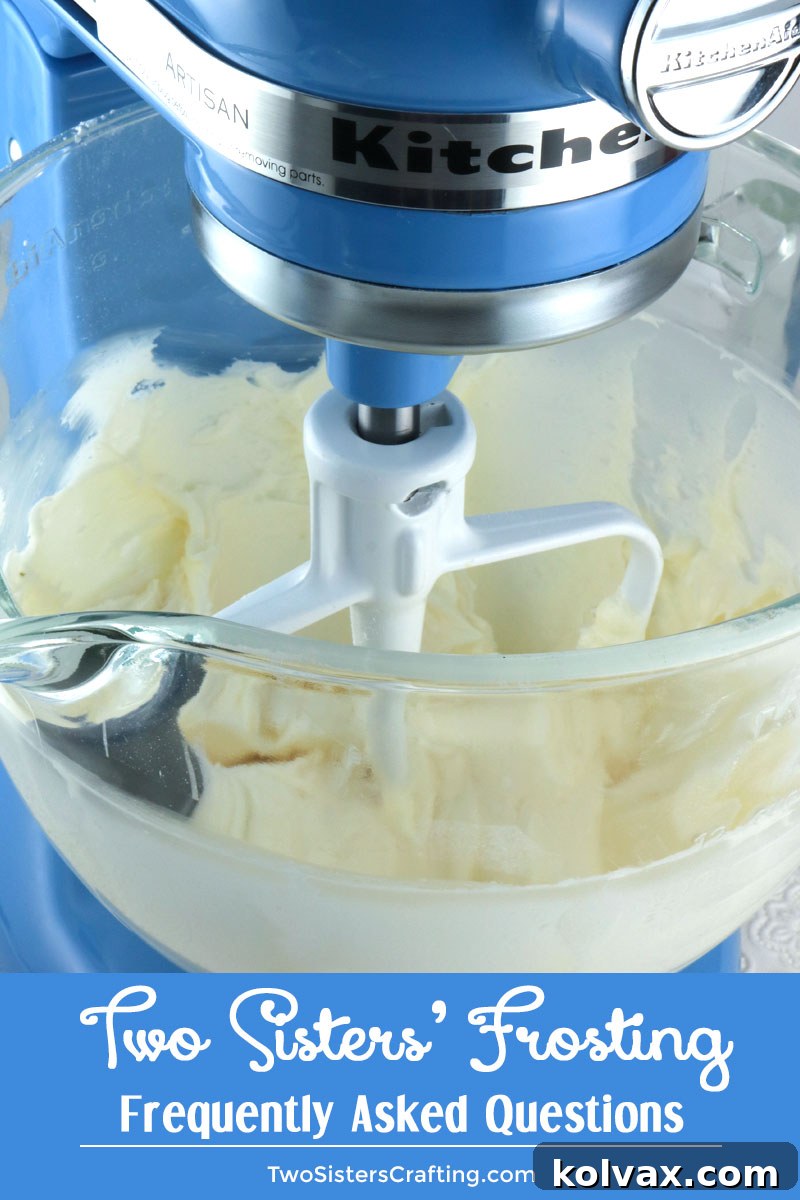
If you’re eager for even more expert tips and clever tricks to create that perfect batch of homemade frosting, as well as elevate your overall baking skills, we have a wealth of other informative posts you’ll definitely want to explore. Dive into these resources to expand your baking repertoire:
- The Best Buttercream Frosting Recipe: Our Tried-and-True Classic
- How to Frost the Perfect Cupcake: Techniques for Stunning Swirls
- Five Creative Ways to Decorate a Cupcake: Simple & Impressive Ideas
- Your Comprehensive Frosting Color Guide: Achieving Any Hue
- Working with Cake Mixes: Tips for Elevating Boxed Mixes to Bakery Quality
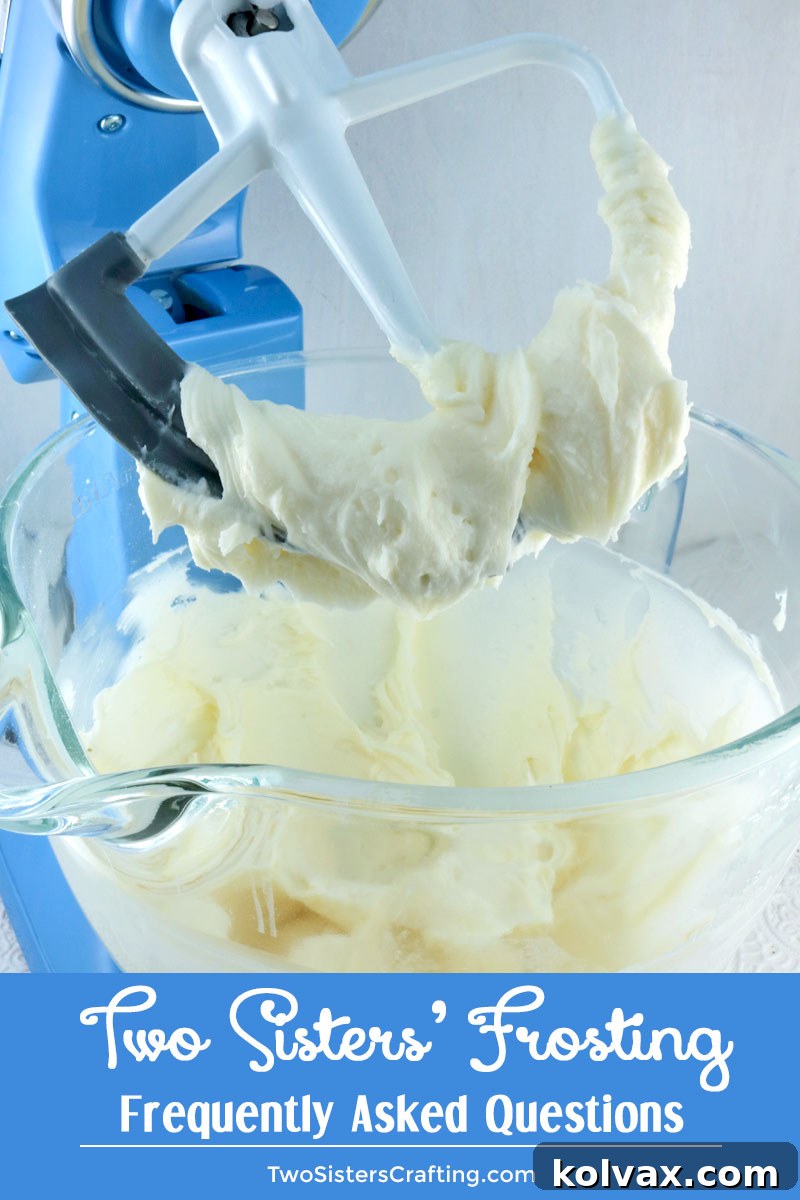
Pin This Guide for Future Frosting Perfection!
Don’t let these invaluable frosting tips slip away! Make sure to pin this comprehensive Two Sisters’ Frosting Frequently Asked Questions post for quick reference whenever you’re whipping up your next batch of homemade deliciousness. It’s the ultimate resource to help you achieve flawless frosting results every time.